
Asparagus Fern 101: Indoor Care Tips
The Surprisingly Easy Houseplant You’ve Been Overlooking
Asparagus fern indoors is one of the most rewarding plants you can grow — feathery, lush, and far more forgiving than it looks.
Here’s a quick overview of what it needs to thrive:
| Care Factor | What It Needs |
|---|---|
| Light | Bright, indirect light (east-facing window is ideal) |
| Water | When top inch of soil is dry; less in winter |
| Humidity | High — mist regularly or use a pebble tray |
| Temperature | 55–70°F (13–21°C); away from cold drafts |
| Soil | Well-draining, slightly acidic mix (pH 6.5–6.8) |
| Fertilizer | Half-strength all-purpose feed, once a month in spring/summer |
| Repotting | Once a year — roots grow fast |
| Toxicity | Toxic to cats, dogs, and humans — keep out of reach |
Despite its delicate appearance, the asparagus fern is a tough, fast-growing plant. It can add up to 2 inches of growth per day and reach 2–3 feet tall and wide as a mature houseplant.
One thing that surprises most people: it’s not actually a fern at all. It belongs to the Asparagaceae family — making it a distant relative of the asparagus you eat, not a true fern.
Whether you’re dealing with yellowing needles, a dropping plant, or just want to know where to put it, this guide covers everything.
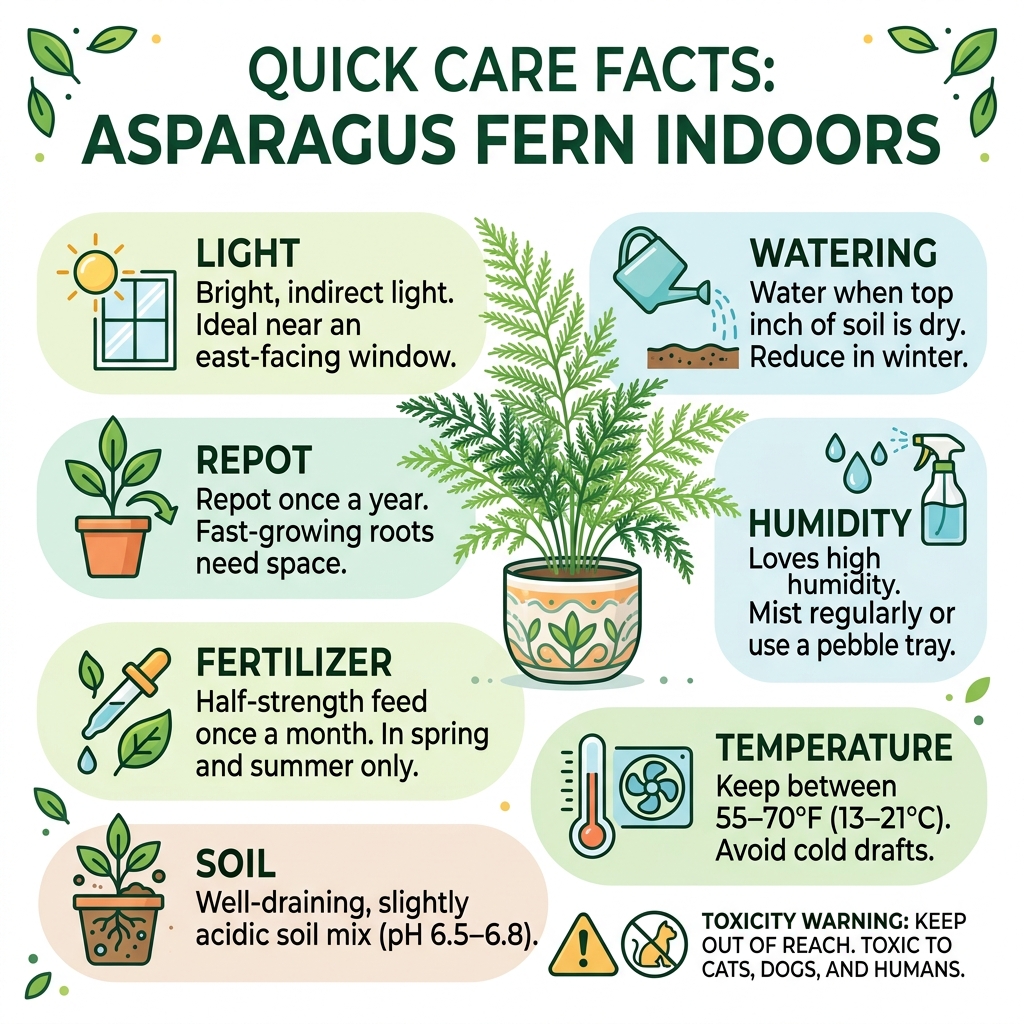
Quick look at asparagus fern indoors:
Understanding the Asparagus Fern: Not a True Fern
When we first bring an asparagus fern indoors, we often treat it like a Boston fern or a Maidenhair. However, that’s where many plant parents go wrong. To master its care, we have to understand what it actually is.
As we mentioned, the asparagus fern is a member of the Asparagaceae (lily) family. While true ferns reproduce via spores and love deep shade, the asparagus fern reproduces via seeds and flowers. It is native to the humid coastal regions of South Africa, which explains its love for warmth and moisture.
Cladodes: The “Leaves” That Aren’t Leaves
One of the most fascinating botanical facts about this plant is that those tiny, needle-like green bits aren’t actually leaves. They are called cladodes. These are flattened, leaf-like branchlets that perform photosynthesis. The “true” leaves are actually tiny, inconspicuous scales found near the base of the cladodes.
According to the Asparagus setaceus (Asparagus Fern) | North Carolina Extension Gardener Plant Toolbox, these plants are prized for their feathery texture, but they can become quite woody and develop sharp spines as they mature. This is why we always recommend wearing gloves when pruning older specimens!
The Power of Tuberous Roots
If you were to peek under the soil, you wouldn’t just see thin, hair-like roots. You would find a dense system of fibrous roots, creeping rhizomes, and fleshy, white bulbous tubers. These tubers are the plant’s “emergency rations.” They store water and nutrients, which is why the asparagus fern is much more drought-tolerant than a true fern.
However, these roots are incredibly aggressive. They grow so quickly that they can literally crack a ceramic pot or push themselves right out of the soil. This is why solutions for overcrowded roots in indoor plants are a common topic for asparagus fern owners.
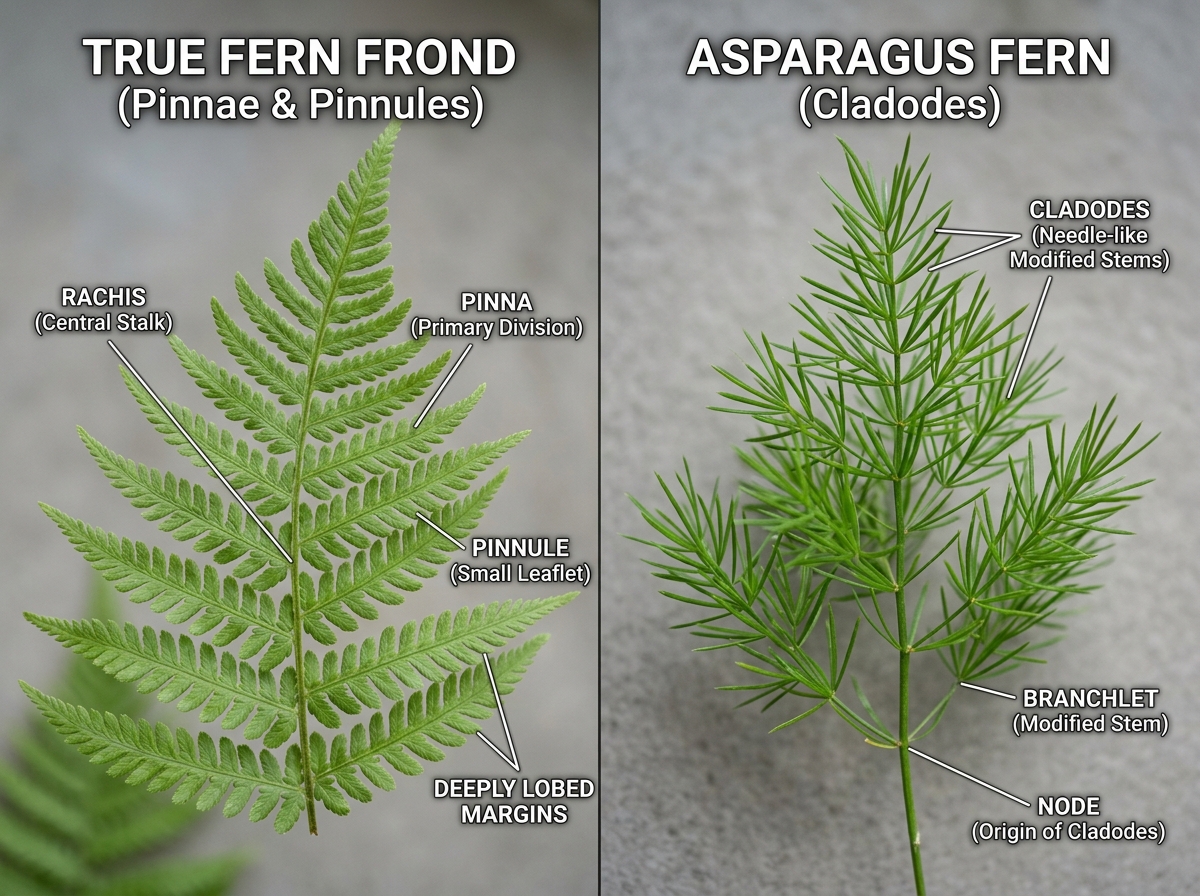
Essential Care for asparagus fern indoors
To keep your plant looking like a lush, green cloud rather than a collection of dried sticks, we need to mimic its native South African habitat. At Futuro Ciencia, we believe that keep them alive: 5 ways to take care of plants starts with understanding the balance of light, water, and air.
Light: The Bright Indirect Rule
The biggest mistake we see is placing an asparagus fern indoors in a dark corner. While they are often sold as “low light” plants, they actually thrive in bright, indirect light. Think of “dappled sunlight” under a tree canopy.
- Too much sun: The cladodes will scorch and turn yellow or brown.
- Too little sun: The plant becomes “leggy” (stretched out) and the needles will drop excessively.
For the best results, check out our guide on indoor plant light requirements to find the perfect spot in your home.
Watering Frequency and Technique
Watering is where the “fern” misnomer causes the most trouble. Unlike true ferns that need constantly soggy soil, the asparagus fern prefers to be kept consistently moist but never waterlogged.
We recommend watering when the top inch of soil feels dry to the touch. During the active growing season (spring and summer), this might mean watering 2-3 times a week. In the winter, the plant enters a resting phase, and you should allow the soil to dry out a bit more.
If you struggle with timing, our watering schedule for indoor plants can help you stay on track. If the needles turn brown and crispy, you’re likely underwatering. If they turn yellow and the stems feel mushy, you might be overwatering, which can lead to root rot. For more help, see our guide on recognizing and remedying root rot in indoor plants.
Humidity: The Secret Ingredient
Indoor air, especially during winter when the heater is running, is far too dry for an asparagus fern. These plants crave a humidity level of around 50-70%.
We have a few favorite ways to boost moisture:
- The Pebble Tray: Fill a shallow tray with pebbles and water, then set the pot on top (ensure the bottom of the pot isn’t touching the water).
- Misting: Give your plant a daily spritz of room-temperature water.
- Grouping: Place your asparagus fern near other plants. They naturally release moisture through transpiration, creating a mini-greenhouse effect.
For more detailed strategies, read our humidity tips for houseplants.
Seasonal Adjustments
Your care routine shouldn’t be the same in July as it is in January. During the winter, growth slows down significantly. We should reduce watering, stop fertilizing entirely, and be extra vigilant about humidity. Check out our indoor plant care during winter guide to ensure your green friend survives the frost.
Ideal Light and Temperature for asparagus fern indoors
The sweet spot for temperature is between 55°F and 70°F (13–21°C). They can tolerate slightly warmer temperatures if the humidity is high, but they absolutely hate cold drafts.
An east-facing window is often the “Goldilocks” zone for asparagus fern indoors — it provides gentle morning sun without the harsh, scorching heat of the afternoon. If you only have south or west-facing windows, move the plant a few feet back or use a sheer curtain to filter the light. Proper indoor plant placement tips can make the difference between a thriving plant and a struggling one.
Best Soil and Potting for asparagus fern indoors
Because those tuberous roots are so aggressive, the choice of soil and pot is critical. We need a mix that holds some moisture but allows the excess to drain away quickly.
- The Mix: A peaty, well-draining potting soil is best. We often suggest a mix of 1 part potting soil to 1 part perlite or sand. The ideal pH is slightly acidic, between 6.5 and 6.8. You can find more details in our guide on the best soil for indoor plants.
- The Pot: Always choose a container with drainage holes. Because the roots are so strong, many growers prefer thick plastic or heavy resin pots; thin terracotta can sometimes be cracked by the expanding tubers! When selecting indoor plant pots and planters, ensure there is enough room for at least one year of growth.
Maintenance: Pruning, Fertilizing, and Repotting
One of the reasons we love the asparagus fern at Futuro Ciencia is its incredible vigor. However, that fast growth rate (up to 2 inches a day!) means you can’t just “set it and forget it.”
Pruning for Shape and Health
Don’t be afraid to give your plant a haircut! Pruning is essential to keep the plant bushy and prevent it from becoming a tangled, leggy mess.
- Pinching: Pinch back the tips of new growth to encourage the plant to branch out rather than just growing longer.
- Deep Pruning: If a stem has become completely yellow or brown, cut it off at the very base. Do not just trim the dead part of the stem, as it won’t regrow from that point.
- Revival: If the whole plant looks sad and leggy, you can actually cut the entire thing back to the soil line. With proper light and water, it will send up fresh, bright green “spears” that look just like garden asparagus!
For more techniques, see our pruning tips for indoor plants.
Fertilizing Your Fern
Because they grow so fast, they are hungry plants. During the spring and summer, we recommend feeding your asparagus fern indoors once a month. Use a balanced, all-purpose liquid houseplant fertilizer diluted to half-strength.
If you prefer a more “green” approach, check out our tips on fertilizing houseplants naturally. Remember to stop feeding in the autumn and winter to allow the plant its natural rest period.
Annual Repotting and Propagation
Most houseplants can go 2-3 years between repottings. Not the asparagus fern. Because of those tuberous roots, you will likely need to repot every single spring.
Signs it’s time to repot:
- Roots are curling around the surface of the soil.
- Roots are pushing out of the drainage holes.
- Water runs straight through the pot without being absorbed.
- The pot feels “tight” or heavy.
When you repot, it’s the perfect time for propagation. Unlike many plants, you can’t just take a stem cutting of an asparagus fern. You must use division.
How to propagate by division:
- Gently remove the plant from its pot.
- Use a clean, sharp knife or your hands to divide the root ball into sections.
- Ensure each section has several healthy stems and a good cluster of tubers.
- Replant each section in fresh soil.
For a step-by-step walkthrough, our guide on how to repot indoor plants is an excellent resource.
Troubleshooting Common Problems and Pests
Even with the best care, you might run into a few hiccups. Here is how we handle the most common issues with asparagus fern indoors.
Yellowing Leaves (Cladodes)
This is the #1 complaint we hear. If your “needles” are turning yellow and falling off, it’s usually a sign of an environmental stressor.
- Light: Too much direct sun or too little light.
- Water: Inconsistent watering (letting it get bone dry and then soaking it).
- Temperature: A sudden cold draft or being too close to a heater.
If you’re seeing this, dive into our article: Why are my indoor plant leaves turning yellow? to diagnose the exact cause.
Brown Tips and Dropping Needles
Brown, crispy tips usually indicate that the air is too dry. Increase your misting routine or move the plant to a more humid room like a bathroom. If the plant is dropping needles like a dry Christmas tree, it’s often a sign of “thirst” or a reaction to a sudden change in its environment. For more help, see fixing brown leaf tips on indoor plants.
Pests: The Uninvited Guests
The fine, feathery foliage of the asparagus fern is a favorite hiding spot for:
- Spider Mites: Look for tiny webs between the stems. They thrive in dry air.
- Mealybugs: These look like small bits of white cotton tucked into the joints of the plant.
- Scale: Small, hard brown bumps on the stems.
We recommend treating these with neem oil or insecticidal soap. For a full breakdown of how to win the war against bugs, read indoor plant pests and how to remove them.
Toxicity Risks
This is a vital point for families: Asparagus ferns are toxic.
- Berries: The small red berries that can appear on mature plants are toxic if ingested, causing abdominal pain, vomiting, and diarrhea.
- Sap: The sap can cause skin irritation (dermatitis) in both humans and pets.
If you have curious cats, dogs, or toddlers, we recommend hanging your asparagus fern in a basket high out of reach. For more safe options, browse our list of indoor plants for beginners with pets.
Frequently Asked Questions about Asparagus Ferns
Can asparagus ferns grow in low light or bathrooms?
Yes and no. While they can survive in medium light, they won’t be as lush or fast-growing. However, bathrooms are actually one of the best places for an asparagus fern indoors! The natural humidity from showers mimics their native environment perfectly. Just ensure there is at least a small window providing some indirect light. For more tips on low-light success, see indoor plant care for low light.
Why is my asparagus fern dropping its needles?
Needle drop is the plant’s way of saying “I’m stressed!” The most common causes are inconsistent watering, very dry air, or a sudden temperature shock (like a blast from an AC vent). If your plant looks like it’s wilting, check out why indoor plants droop for a deeper dive into the causes.
What are the best varieties for indoor growth?
There are several stunning varieties of asparagus fern indoors, each with a unique look:
- Sprengeri (Asparagus densiflorus ‘Sprengeri’): The classic “messy hair” look. Great for hanging baskets.
- Foxtail Fern (Asparagus densiflorus ‘Meyeri’): Features upright, plume-like stems that look like fluffy green fox tails.
- Plumosa Fern (Asparagus setaceus): The most delicate-looking variety, often used by florists. It can actually be trained to climb a trellis!
- Ming Fern (Asparagus macowanii): Grows in zig-zagging woody stems with tufts of needles, giving it a bonsai-like appearance.
You can see photos of these and more in our guide to the 50 most common house plants with pictures.
Conclusion
Growing an asparagus fern indoors is a fantastic way to add texture and a “wild” feel to your home decor. While they aren’t “true” ferns, their resilience and fast growth make them a favorite for both beginners and experienced plant parents alike.
At Futuro Ciencia, we are dedicated to helping you transform your living space into a tranquil, green oasis. By following a consistent indoor plant maintenance checklist and paying attention to your plant’s subtle cues, you can enjoy a lush, feathery companion for years to come.
Ready to expand your indoor jungle? Explore our indoor plant care category for more expert guides and tips!
