
Why a Caladium Bulb Plant Indoors Is Worth Every Bit of Your Attention
Growing a caladium bulb plant indoors is one of the fastest ways to transform a dull corner into a bold, tropical display — without needing a green thumb.
Here’s a quick-start summary for anyone ready to shop and plant:
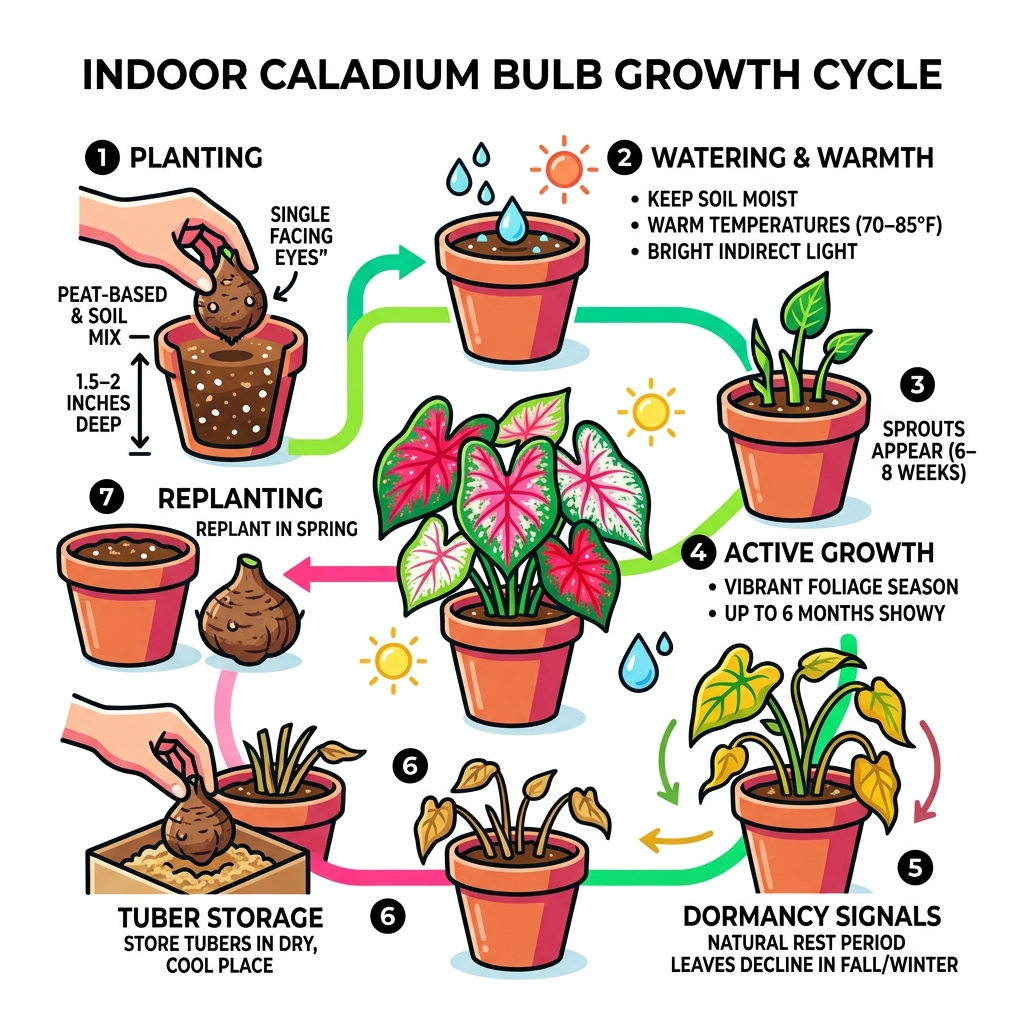
- Plant depth: 1.5–2 inches deep, bumpy side (eyes) facing up
- Pot size: 4–6 inch pot with drainage holes
- Soil: Peat-based, slightly acidic (pH 5.5–6.2), mixed with perlite
- Temperature: 70–85°F (21–29°C) for active growth
- Light: Bright indirect light; avoid direct midday sun
- Humidity: 50% or higher
- Time to sprout: 6–8 weeks indoors (faster closer to 75°F+)
- Showy season: Up to 6 months of vibrant foliage
- Dormancy: Natural rest in winter; tubers can be stored and replanted
Caladiums are tropical perennials from South and Central America. They grow from tubers (often called bulbs) and are prized almost entirely for their spectacular heart-shaped leaves — not their flowers. With over 2,000 cultivars available, the color range is staggering: deep reds, soft pinks, crisp whites, and every shade of green, often all on a single leaf.
The good news for busy homeowners? Once you nail the basics — warmth, indirect light, and consistent moisture — these plants are remarkably low-maintenance. They’re generally pest-resistant and won’t punish you for the occasional missed watering the way other tropicals might.
One thing to know upfront: caladiums do go dormant in winter, even indoors. That’s not a problem — it’s just part of their natural cycle. You store the tubers, then replant in spring for another stunning season.
Why You Should Choose a Caladium Bulb Plant Indoors
If you are looking to breathe life into your home, few things compare to the sheer architectural beauty of a caladium bulb plant indoors. While many people buy pre-sprouted plants from nurseries, starting from the “bulb” (technically a tuber) is a rewarding journey that allows you to access a much wider variety of colors and patterns.
The foliage variety is truly unparalleled. You can find leaves that look like they’ve been splattered with neon pink paint, or others that feature delicate, paper-thin white membranes with deep green veins. These heart-shaped leaves can grow up to 12 inches long, creating a lush, jungle-like feel in even the smallest apartment.
Beyond aesthetics, growing from a bulb is an excellent project for those following indoor plant care tips for beginners. It teaches you about the life cycle of tropical species and provides a sense of accomplishment when that first spear-like shoot breaks through the soil. If you’re worried about difficulty, rest assured that caladiums are often cited as easy indoor plants for beginners because they aren’t prone to many pests and they clearly communicate their needs through their foliage.

Step-by-Step: Planting and Potting Basics
Success with a caladium bulb plant indoors starts long before the first leaf unfurls. It begins with selecting high-quality tubers. When shopping, you’ll likely see different sizes, primarily #1 bulbs and Jumbo bulbs.
- #1 Bulbs: These are the standard size. They are affordable and perfect if you have a long growing season or want to plant several in one large container.
- Jumbo Bulbs: These are larger and contain more stored energy. We recommend Jumbo bulbs for indoor growing if you want a faster “full” look or if you’re starting a bit later in the spring.
Before planting, check the firmness of the tuber. It should feel like a fresh potato—firm and solid. If it feels mushy or excessively light and shriveled, it may have rotted or dried out completely.
For your potting setup, drainage is non-negotiable. Caladiums love moisture, but they despise “wet feet.” Stagnant water at the bottom of a pot is the fastest way to kill a tuber. Always choose a pot with at least one large drainage hole. If you’re unsure about the right medium, check our guide on the best soil for indoor plants. Generally, a mix that is rich in organic matter but light enough to breathe is ideal. If you are moving a plant you bought from a store into a more decorative vessel, be sure to follow the proper steps on how to report indoor plants to avoid transplant shock.
How to Correctly Set Up Your Caladium Bulb Plant Indoors
One of the most common questions we hear is: “Which side goes up?” Unlike a tulip bulb, which has a clear pointy end, a caladium tuber can look like a lumpy brown potato.
Look for the “eyes”—these are small, bumpy growth points where the stems will emerge. These eyes should face upward. Some growers even paint the top of the bulbs white to make this easier for you! If you can’t find the eyes, look for a side that is slightly more concave or flat; that is usually the bottom where the roots will grow. If you are truly stumped, planting the bulb on its side is a safe bet—the plant will figure it out!
Plant the tuber about 1.5 to 2 inches deep. This depth provides enough soil for the roots to anchor the heavy leaves as they grow. After planting, give it a light “watering in” to settle the soil around the tuber, but don’t soak it until you see growth. For more detailed potting techniques, see how to repot indoor plants 2.
Ideal Potting Mix and Container Sizes
Caladiums prefer a slightly acidic environment (pH 5.5 to 6.2). A peat-moss-based potting mix is excellent because it retains moisture while maintaining that slight acidity. We suggest adding about one-third perlite to the mix to ensure the soil stays porous and doesn’t compact over time.
For container size, a 6-inch pot is usually perfect for a single #1 or Jumbo tuber. If you want a denser display, you can plant two #1 bulbs in a larger 8 or 10-inch pot. Just remember that overcrowding can lead to smaller leaves and poor air circulation, which is one of the common indoor plant care mistakes that can lead to fungal issues.
Mastering Indoor Conditions for Tropical Foliage
To make your caladium bulb plant indoors thrive, you need to mimic its native tropical habitat. This means focusing on two things: humidity and temperature.
Caladiums are happiest when the relative humidity is 50% or higher. In many modern homes, especially during the transition from spring to summer when air conditioning is running, the air can become quite dry. You can boost humidity by:
- Using a cool-mist humidifier nearby.
- Placing the pot on a tray filled with pebbles and water (ensure the pot sits on the pebbles, not in the water).
- Misting the air around the plant daily.
Consistency is key. Check out our humidity tips for houseplants for more creative ways to keep the air moist. When it comes to hydration, keep the soil evenly moist like a wrung-out sponge. Never let the soil dry out completely during the growing season, but don’t let it become a swamp. Establishing a watering schedule for indoor plants can help you stay on track.
Light and Heat for Your Caladium Bulb Plant Indoors
Temperature is the “on switch” for caladium growth. These tubers will not even begin to sprout until the temperature hits at least 70°F (21°C). Ideally, you want to keep them in a spot that stays between 70°F and 85°F. If your home is chilly, you can use a seedling heat mat under the pot to jumpstart the sprouting process.
Light requirements are equally specific. Caladiums are understory plants, meaning they like bright, indirect sunlight.
- East or West windows: These are usually perfect, providing a few hours of gentle morning or evening sun.
- North windows: Can work, but growth might be slower. See our list of indoor plants that thrive in low light if your home lacks bright windows.
- South windows: Be careful here. Direct midday sun can actually scorch the paper-thin leaves. Use a sheer curtain to filter the light if necessary.
Understanding indoor plant light requirements is the difference between a leggy, pale plant and a vibrant, bushy one.
Fertilization and Growth Acceleration
Because caladiums grow so much foliage in a short period (about 6 months), they are relatively hungry plants. However, they don’t need as much “food” as heavy-blooming flowers.
We recommend a balanced liquid fertilizer or a high-nitrogen feed every two weeks during the peak growing season. Nitrogen is the key ingredient for leaf development and color intensity. If you prefer a more “set it and forget it” approach, you can mix slow-release fertilizer pellets into the soil at planting time. For those looking for eco-friendly options, we have a guide on fertilizing houseplants naturally.
Pro Tip: Occasionally, your caladium might produce a flower called a “spathe.” While interesting, these flowers take a lot of energy away from the leaves. Most enthusiasts recommend cutting the flowers off as soon as they appear to keep the plant’s focus on its stunning foliage. Use clean shears and follow our pruning tips for indoor plants to keep your plant healthy.
Managing the Caladium Life Cycle: Dormancy and Beyond
One of the most unique aspects of the caladium bulb plant indoors is its mandatory nap. Around autumn, you might notice the leaves starting to yellow and droop, even if you’re doing everything right. Don’t panic! The plant isn’t dying; it’s entering dormancy.
In the tropics, this happens during the dry season. Indoors, it usually happens as the days get shorter. When the foliage starts to fail:
- Stop watering. Let the soil dry out completely.
- Cut back the leaves. Once they are totally brown and withered, snip them off at the soil line.
- Store the tubers. You can either leave the tubers in the dry soil or “lift” them out. If you lift them, brush off the dirt and store them in a paper bag with some peat moss or vermiculite.
- Temperature matters. Keep the dormant tubers in a dark, dry place around 60-65°F. Do not let them get colder than 55°F, or the tubers may die.
Managing indoor plant care during winter is mostly about patience. After about 2-3 months of rest, you can repot them in fresh soil, add warmth, and start the cycle all over again. For the scientifically curious, you can read more about the Scientific research on Caladium Araceae classification to understand why these plants behave the way they do.
The Ultimate Shopping List: Top Caladium and Echeveria Varieties
While Caladiums provide height and broad leaves, many indoor gardeners love to pair them with Echeverias (succulents) to create a diverse “plant shelf” aesthetic. However, they have very different needs!
| Feature | Caladium | Echeveria |
|---|---|---|
| Light | Bright Indirect | Direct Sun |
| Water | Consistently Moist | Dry between waterings |
| Humidity | High (50%+) | Low (Dry) |
| Growth Type | Tuber (Dormant in Winter) | Evergreen Succulent |
| Best For | Color & Drama | Texture & Symmetry |
Top Caladium Varieties for Your Home
- ‘White Christmas’: Large, arrow-shaped leaves that are almost entirely white with deep green veins. It’s a classic for a reason.
- ‘Pink Beauty’: Features dark green edges with vibrant pink splotches and dark pink veins. It looks like a watercolor painting.
- ‘Thai Beauty’: One of the most stunning varieties, with leaves that transition from green to a brilliant, glowing pink.
- ‘Florida Cardinal’: A bold choice with a bright red center and a wide green margin.
Recommended Echeverias
- Echeveria ‘Lola’: Known for its pale, alabaster-colored rosettes that have a hint of lavender.
- Echeveria ‘Afterglow’: A larger variety with powdery pinkish-purple leaves edged in bright pink.
A Note on Safety: Before you buy, please be aware that all parts of the caladium plant are toxic if ingested. They contain calcium oxalate crystals which cause intense mouth irritation and swelling. Always check the toxicity profile of Caladiums for pet owners if you have curious cats or dogs.
Frequently Asked Questions about Indoor Caladiums
How long does it take for indoor caladium bulbs to sprout?
Patience is a virtue here! On average, it takes 6 to 8 weeks for a caladium bulb plant indoors to produce its first leaves. However, this is heavily dependent on temperature. If your room is a constant 75°F or higher, you might see action in just a few weeks. If it’s closer to 65°F, it could take up to 12 weeks. Don’t dig them up to check—you might damage the delicate new roots!
Are caladiums toxic to cats and dogs?
Yes. As mentioned above, they contain calcium oxalate. If a pet (or child) chews on the leaves, they will experience a burning sensation in the mouth, drooling, and potential vomiting. We recommend keeping these plants on high shelves or in rooms where pets are not allowed.
Can I grow caladiums indoors year-round?
Technically, yes, but they still require a rest. You can keep them in their pots year-round, but they will naturally stop producing leaves and “die back” for a few months in the winter. You cannot force them to stay lush and green 12 months a year; they need that dormancy to recharge their energy for the next showy season.
Conclusion
At Futuro Ciencia, we believe that your home should be a sanctuary. By introducing a caladium bulb plant indoors, you aren’t just adding a decoration; you’re bringing in a living piece of the tropics that purifies your air and brightens your mood. Whether you are a seasoned gardener or just starting your journey, our plant care schedules and guides are here to ensure your space remains a tranquil oasis.
Ready to start your indoor jungle? Transform your home with our expert plant care guides and discover the joy of watching a simple brown tuber turn into a masterpiece of nature. Happy planting!
