
You Don’t Need a Green Thumb to Enjoy Indoor Plants
Easy care green house plants are the perfect solution for busy people who love the idea of indoor greenery but don’t have time for complicated care routines.
Here are the top easy-care green houseplants to get started with:
| Plant | Light Needs | Watering Frequency |
|---|---|---|
| Snake Plant | Low to bright indirect | Every 2-4 weeks |
| ZZ Plant | Low to medium indirect | Every 2-3 weeks |
| Pothos | Low to bright indirect | Every 1-2 weeks |
| Chinese Evergreen | Low to medium indirect | Every 1-2 weeks |
| Philodendron Imperial Green | Bright indirect | When top 1-2 inches dry |
| Spider Plant | Bright indirect | When soil is dry |
| Dracaena Janet Craig | Low to medium indirect | Every 7-10 days |
Most people kill houseplants with too much attention — mainly overwatering. The truth is, the easiest plants to own are ones that actually prefer being left alone.
A Snake Plant can go weeks without water. A ZZ Plant stays glossy and green through a dry winter with almost no help. These plants don’t need you to be perfect — they just need you to not overdo it.
The key idea is simple: the easiest plant is one that matches your home’s conditions, not one you have to adapt your life around.
Whether your space is dim, dry, or you travel frequently, there’s a low-maintenance green plant that will thrive in it.
What Defines Easy Care Green House Plants?
When we talk about easy care green house plants, we aren’t just talking about plants that refuse to die. We are talking about botanical roommates that are flexible, forgiving, and functionally independent. In our experience at Futuro Ciencia, a truly low-maintenance plant possesses a few specific “superpowers.”
First is neglect tolerance. These are indoor plants that survive neglect because they have evolved to handle irregular watering. For instance, the Snake Plant (Sansevieria) stores water in its thick, sword-like leaves, allowing it to go weeks without a drink. This makes them hardy indoor plants for busy people who might forget a watering session while traveling or working late.
Second is environmental adaptability. Most “difficult” plants require a specific humidity level (usually 60%+) or a very narrow temperature range. Easy-care varieties are much more chill. They can handle the dry air produced by office air conditioning or home heaters during the winter. They also offer light flexibility; while most plants prefer bright, indirect light, many of our favorite green friends can survive in deep shade where you’d struggle to read a book without a lamp.
Finally, these plants often provide a “return on investment” by acting as natural air purifiers. According to NASA’s famous 1989 Clean Air Study, many easy-care species like the Chinese Evergreen and Snake Plant actually filter out indoor pollutants like benzene and formaldehyde. You get a cleaner home and a beautiful aesthetic, all for the price of a little water once or twice a month.
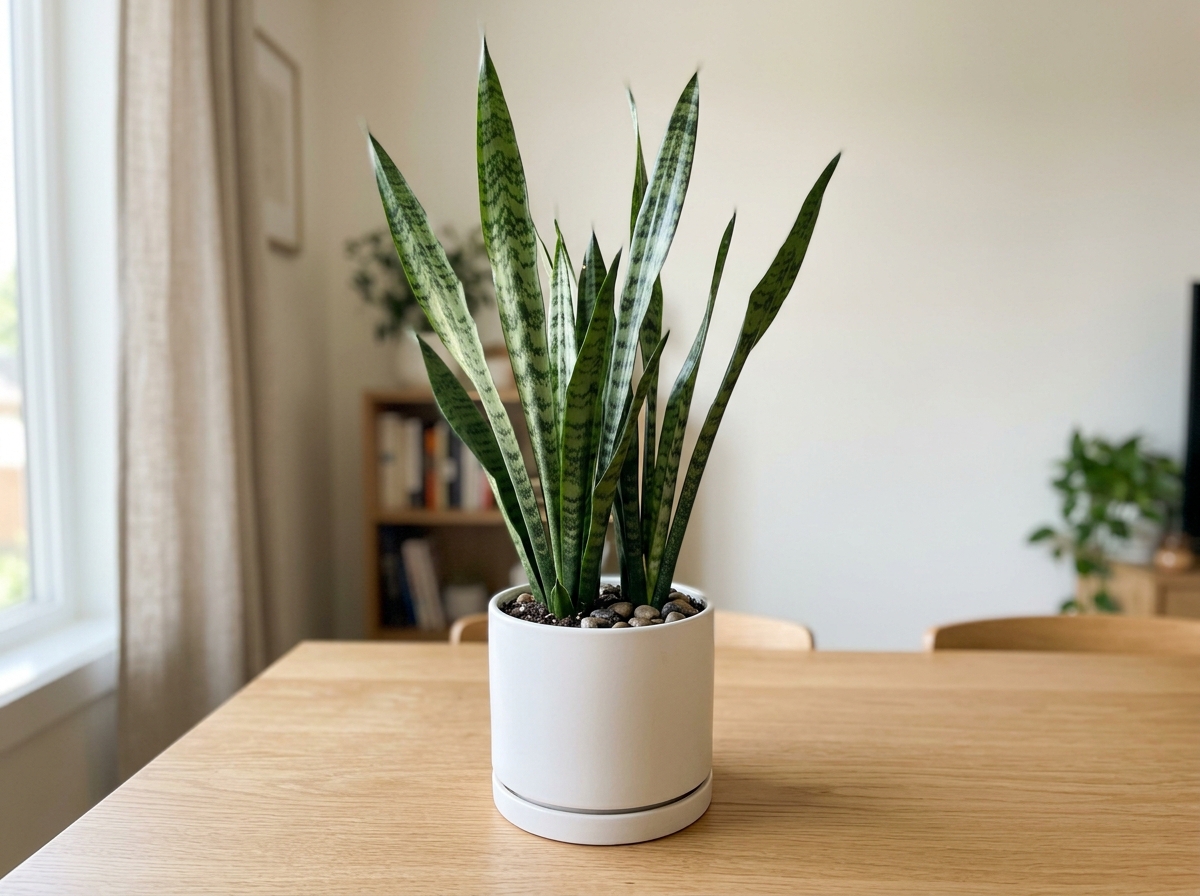
The Ultimate List: 12 Hard-to-Kill Indoor Plants
If you are just starting your journey, we recommend picking one or two from this list to see how they adapt to your specific home environment. Here is our breakdown of the best easy indoor plants for beginners.
- Snake Plant (Sansevieria): Often called the “Mother-in-Law’s Tongue,” this plant is virtually indestructible. It thrives on neglect, tolerates low light, and only needs water when the soil is bone dry.
- ZZ Plant (Zamioculcas zamiifolia): This plant features waxy, emerald-green leaves that look fake because they stay so shiny. It is highly drought-tolerant and thrives in dim corners or windowless offices.
- Pothos (Epipremnum aureum): Known as “Devil’s Ivy” because it is so hard to kill, this vining plant is perfect for shelves. It grows fast and is incredibly easy to propagate.
- Philodendron Imperial Green: A “self-heading” plant, meaning it grows upright rather than vining. It reaches 35-45 inches tall and stays compact and glossy with minimal effort.
- Spider Plant (Chlorophytum comosum): These are great low-water indoor plants that produce “babies” on long stems. They are very forgiving of inconsistent watering.
- Jade Plant (Crassula ovata): A classic succulent that symbolizes prosperity. As long as it gets some sunlight, it can live for decades with very little water.
- Peace Lily (Spathiphyllum): While it likes a bit more water than a Snake Plant, it “talks” to you by drooping when it’s thirsty, making it a great teacher for beginners.
- Monstera Deliciosa: The “Swiss Cheese Plant” is surprisingly hardy. It handles average home humidity well and grows massive, iconic leaves that instantly transform a room.
- Dracaena Janet Craig: This upright plant is a champion of low-light spaces. It grows slowly and only needs a drink every 7 to 10 days.
- Chinese Evergreen (Aglaonema): A durable tropical plant that comes in many colors. It handles dry air and air conditioning better than almost any other leafy plant.
- Aloe Vera: Beyond being an indoor succulent that is easy to care for, it provides a soothing gel for burns. Just give it a sunny windowsill and forget about it.
- Rubber Plant (Ficus elastica): With thick, leathery leaves, this plant is a statement piece. It’s more resilient than its cousin, the Fiddle Leaf Fig, and handles varying light levels well.
Best Easy Care Green House Plants for Low Light
Not everyone has a sun-drenched sunroom. If your apartment feels more like a “cozy cave,” you need plants that can photosynthesize efficiently in the dark.
The Aglaonema Maria (a variety of Chinese Evergreen) is our top pick here. Research shows it can survive in as little as 50–75 lux—that is roughly the light level of a dim hallway. This makes it one of the best indoor plants that thrive in low light. For more detailed species information, check out the Chinese Evergreen (Aglaonema) Care, Cultivation & Growing Guide | Home & Garden Information Center.
Other excellent low-maintenance plants for offices include the ZZ Plant and the Snake Plant. These varieties have been proven to thrive under fluorescent office lighting even when natural sunlight is completely absent.
Pet-Friendly Easy Care Green House Plants
We know many of you are “pet parents” as well as “plant parents.” Unfortunately, some easy-care staples like the Snake Plant and ZZ Plant are toxic if chewed on by curious cats or dogs.
If you need non-toxic options, the Spider Plant and Bamboo Palm are fantastic choices. Both are listed as safe by the ASPCA. The Spider Plant is especially fun for apartments because its long, arching leaves look great in hanging baskets out of reach of jumping kitties. Another beautiful, safe option is the Boston Fern, though it does require a bit more humidity than the average low-maintenance flowering indoor plant. Always check the best indoor plants for apartments lists to ensure your new greenery won’t harm your furry friends.
Essential Care: Light, Water, and Soil Requirements
Even though these are easy care green house plants, they still have basic biological needs. Think of these tips as the “minimum viable product” for plant care.
The Magic of Indirect Light
Most easy-care plants want “bright, indirect light.” This means a spot where the sun doesn’t hit the leaves directly (which can scorch them) but where the room is still well-lit. A good rule of thumb: if the plant casts a soft, blurry shadow, the light is probably just right.
Master the “Knuckle Test”
The number one killer of houseplants is root rot from overwatering. Before you grab the watering can, stick your finger into the soil up to the second knuckle. If the soil feels damp or cold, put the watering can away! If it’s dry and crumbly, it’s time for a drink. We recommend using room-temperature water to avoid shocking the tropical roots.
Soil and Pots Matter
For beginners, we always suggest using a well-draining potting mix. A standard mix with added perlite or sand works wonders. Most importantly, ensure your pot has drainage holes. Without them, water pools at the bottom, suffocating the roots. This is a core part of our indoor plant care tips for busy people.
Humidity and Feeding
While these plants are tough, they enjoy a bit of extra moisture in the air. You can group plants together to create a micro-climate or place them on a tray filled with pebbles and water. As for food, most easy-to-grow-indoor-plants only need fertilizer once or twice a year, typically during the spring or summer growing season. Use a standard liquid fertilizer diluted to half-strength to avoid “burning” the leaves.
Troubleshooting and Propagation for Beginners
Even the hardiest plants can run into trouble. Don’t panic if you see a yellow leaf! Here is how to fix common issues and even grow new plants for free.
Common Problems
- Yellow Leaves: Usually a sign of overwatering. Check the soil; if it’s soggy, let it dry out completely before watering again.
- Brown, Crispy Tips: This often indicates low humidity or a buildup of minerals (like fluoride) from tap water. Try using filtered water or rainwater.
- Mealybugs or Pests: These look like tiny bits of white cotton. Simply wipe the leaves with a cloth dipped in rubbing alcohol or a mild soap solution. Keeping leaves clean by wiping them with a damp microfiber cloth once a week helps prevent these issues.
Propagation: Free Plants!
One of the joys of indoor plants that need little care is how easy they are to multiply.
- Pothos: Simply cut a stem below a “node” (the little bump where a leaf grows) and place it in a jar of water. In a few weeks, you’ll see roots!
- Snake Plants: You can propagate these by leaf cuttings or by “division”—simply pulling the plant apart at the roots when it gets too crowded in the pot.
- Spider Plants: Snip off the “babies” that grow on the long stems and tuck them into a small pot of moist soil.
For more tips on multiplying your collection, see our guide on indoor succulents that are easy to care for.
Frequently Asked Questions about Easy Care Plants
How often should I water my low-maintenance plants?
There is no “one size fits all” schedule, as it depends on your home’s temperature and humidity. However, most easy-care plants like the ZZ or Snake Plant only need water every 2 to 4 weeks. In the winter, when plants go dormant, you can often cut your watering frequency in half. Always trust the soil dryness over a calendar!
Can easy-care plants survive in windowless offices?
Yes! Many varieties like the ZZ Plant, Snake Plant, and Aglaonema are adapted to low-light forest floors. They can survive quite happily under standard fluorescent office lights. Just be careful not to overwater them, as plants in low light take much longer to “drink” the water in their soil.
Do I need to fertilize my indoor plants?
While not strictly necessary for survival, a little boost helps. We recommend fertilizing only during the “growing season” (March through October). Use a general-purpose houseplant fertilizer at half-strength every 2-3 months. If you see salt buildup (white crust) on the soil, skip the fertilizer and flush the soil with plain water.
Conclusion
At Futuro Ciencia, we believe that everyone deserves a touch of nature in their home, regardless of how busy their lifestyle is. Transforming your space into a tranquil oasis doesn’t require hours of gardening—it just requires choosing the right easy care green house plants.
By selecting hardy varieties like the Snake Plant, ZZ Plant, or Chinese Evergreen, you can enjoy the air-purifying benefits and mental health boosts of greenery without the stress of a demanding care routine. Our goal is to help you maintain these beautiful companions with simple, automated care schedules and expert guides.
Ready to turn that dark corner into a lush jungle? Start your low-maintenance plant journey today and discover how easy it is to grow your own indoor sanctuary!
