
Your Indoor Air Is More Polluted Than You Think
The best plants purify air by absorbing harmful chemicals that build up inside your home every day. Here’s a quick look at the top options:
| Plant | Key Pollutants Removed | Difficulty |
|---|---|---|
| Snake Plant | Formaldehyde, benzene, xylene | Very easy |
| Spider Plant | Formaldehyde, carbon monoxide | Very easy |
| Peace Lily | Benzene, mold spores, acetone | Easy |
| English Ivy | Benzene, formaldehyde, toluene | Easy |
| Boston Fern | Xylene, toluene, formaldehyde | Moderate |
| Bamboo Palm | Benzene, trichloroethylene | Easy |
| Golden Pothos | Benzene, formaldehyde, VOCs | Very easy |
| Rubber Plant | Formaldehyde, mold spores | Easy |
| Dracaena | Benzene, trichloroethylene | Easy |
| Gerbera Daisy | Formaldehyde, benzene | Moderate |
When we think about air pollution, we picture smoggy highways and factory smoke. But the air inside your home can be up to five times more polluted than the air outside.
The culprits? Things you use every day.
Furniture, carpet, paint, cleaning products — they all release invisible chemicals called Volatile Organic Compounds (VOCs). These include formaldehyde, benzene, and trichloroethylene. Long-term exposure is linked to headaches, respiratory problems, and worse.
This is sometimes called Sick Building Syndrome — and it’s more common than most people realize.
The good news? A NASA study from 1989 found that common houseplants can remove up to 87% of indoor air pollutants within 24 hours. Plants filter toxins through their leaves and roots, breaking harmful chemicals down into harmless byproducts.
You don’t need a complex air filtration system. You might just need a few well-chosen plants.
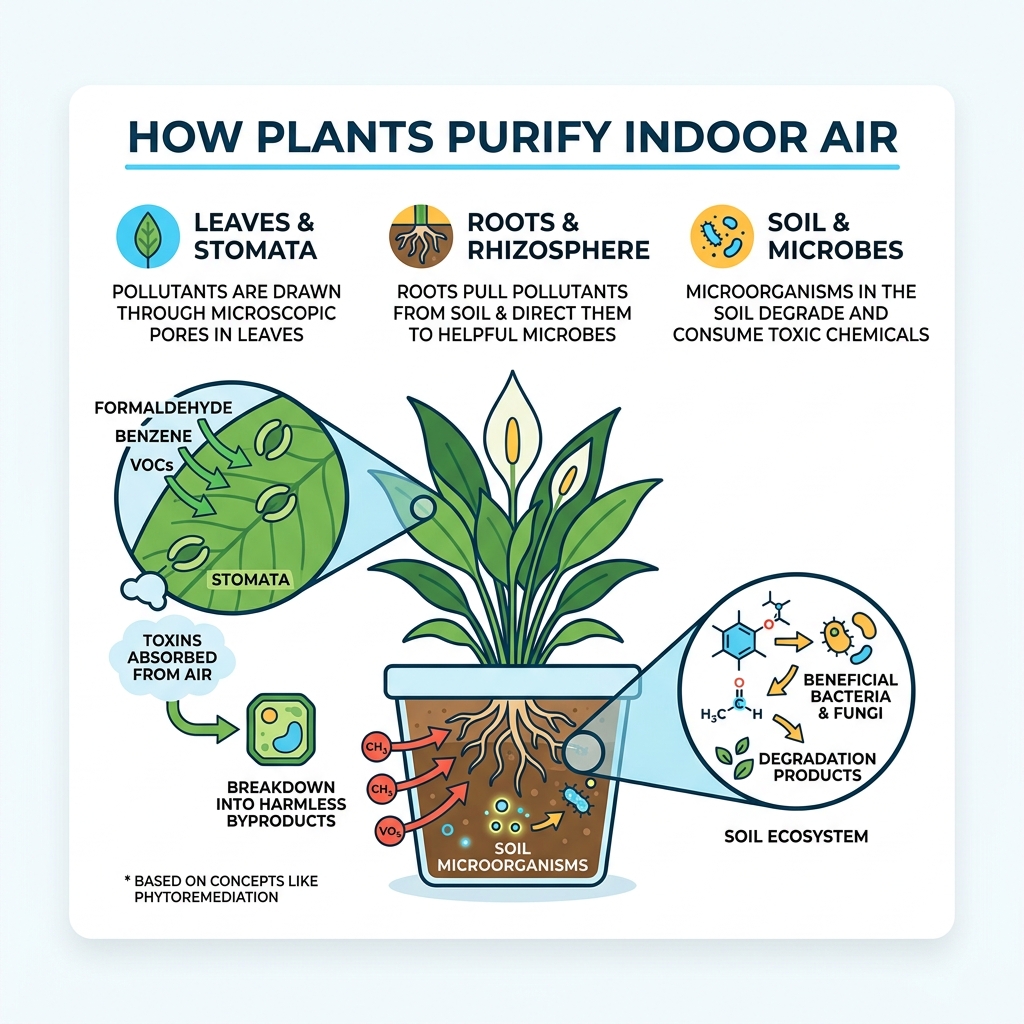
The Science: How the Best Plants Purify Air
The idea of using greenery to scrub the air isn’t just a “crunchy” lifestyle trend; it is backed by decades of rigorous scientific research. The most famous authority on this is the NASA Clean Air Study, conducted in 1989 in association with the Associated Landscape Contractors of America.
Led by Dr. Bill Wolverton, NASA researchers were looking for ways to keep the air clean for astronauts living in sealed space stations. They discovered that plants are essentially biological engines. Through a process called phytoremediation, plants use their leaves, roots, and the microorganisms living in their soil to absorb and neutralize toxic gases.
The “Big Five” Toxins
When we talk about the best plants purify air, we are usually measuring their ability to remove these specific chemicals:
- Formaldehyde: Found in plywood, particleboard, grocery bags, and tissues. It can irritate the nose, mouth, and throat.
- Benzene: Found in plastics, synthetic fibers, lubricants, dyes, and detergents. It’s a known carcinogen.
- Trichloroethylene: Found in printing inks, paints, lacquers, and adhesives.
- Xylene: Found in rubber, leather, and paint industries.
- Toluene: Often found in nail polish, glues, and stain removers.

As plants “breathe” through microscopic pores in their leaves called stomata, they pull these toxins into their system. Some pollutants are destroyed by the plant’s own enzymes, while others are moved down to the roots, where soil microbes break them down into food for the plant. For more technical details, you can explore this scientific research on air-filtering plants.
Top 10 Best Plants Purify Air: A Comprehensive Guide
Choosing the right plant depends on your home’s light levels and how much time you have for “plant parenthood.” If you are just starting out, we recommend checking out our guide on easy-to-grow indoor plants to build your confidence.
Snake Plant: The Nighttime Oxygen Producer
Often called Mother-in-Law’s Tongue (thanks to its sharp, pointed leaves), the Snake Plant is the undisputed heavyweight champion of the plant world. It is incredibly efficient at benzene removal and filtering out formaldehyde.
What makes it truly special is its CAM photosynthesis. Most plants take in CO2 and release oxygen during the day. The Snake Plant does the opposite—it opens its stomata at night to release oxygen, making it the perfect companion for your bedroom. It’s also one of the indoor plants that thrive in low light, meaning it can live in that dark corner you’ve been trying to decorate.
For those interested in the botany, you can read the scientific profile for snake plant or dive into this low-maintenance air-purifying plant study which highlights its 50-60% improvement rate on air quality.
Spider Plant: The Best Plants Purify Air for Beginners
The Chlorophytum comosum, or Spider Plant, is the ultimate “starter” plant. According to NASA, it can eliminate up to 95% of harmful chemicals—including carbon monoxide and formaldehyde—within just 24 hours.
We love this plant because it is non-toxic and completely safe for pets. It’s also famous for producing “spiderettes” (tiny baby plants) that you can easily clip and grow in water to give to friends. If you’re looking for more options like this, see our list of easy indoor plants for beginners.
Peace Lily: The Best Plants Purify Air for Mold Reduction
The Spathiphyllum, or Peace Lily, is as functional as it is beautiful. Beyond its elegant white blooms, it is a powerhouse at absorbing mold spores from the air, making it a great choice for bathrooms or laundry rooms.
It also targets acetone and alcohol vapors. Just a heads-up: Peace Lilies will “faint” (wilt dramatically) when they are thirsty, which is a helpful reminder for forgetful waterers! You can find more flowering options in our guide to low-maintenance flowering indoor plants.
Maximizing Your Indoor Air Quality: Placement and Care
Simply buying a plant and putting it in a corner isn’t enough. To truly see the benefits of how the best plants purify air, you need to follow a few “pro” strategies.
The “Two-Plant” Rule
Research suggests that for noticeable air purification in a standard home, you should aim for at least two medium-to-large plants per 100 square feet. If you live in a 1,000-square-foot apartment, that means 20 plants. While that sounds like a lot, grouping them together actually creates a “micro-jungle” effect that increases humidity and filtration efficiency.
Soil Exposure and Dusting
Did you know that leaving the soil exposed—rather than covering it with decorative rocks—can increase toxin absorption by up to 15%? This allows air to circulate better around the root zone where the heavy-duty filtration happens.
Also, keep those leaves clean! A layer of dust acts like a barrier, preventing the plant from “breathing” in pollutants. We recommend wiping leaves with a damp cloth once a month. For a full routine, download our indoor plant maintenance checklist.
Humidity and Lighting
Plants like the Boston Fern act as natural humidifiers, which is a lifesaver during dry winter months. However, they need consistent moisture to do their job. If you’re a busy professional, you might prefer hardy indoor plants for busy people that don’t mind if you miss a watering or two.
Safety First: Pet-Friendly and Bedroom-Specific Options
While we want clean air, we also want our furry friends to be safe. Many air-purifying plants, such as the Peace Lily, English Ivy, and Snake Plant, are toxic if ingested by cats or dogs.
Non-Toxic Superstars
If you have curious pets, stick to these varieties:
- Boston Fern: Great for xylene and formaldehyde.
- Bamboo Palm: Excellent for benzene and trichloroethylene.
- Spider Plant: The “beginner’s favorite” that is 100% safe.
For more pet-safe ideas, check our curated list of indoor plants for beginners with pets.
Improving Sleep Quality
If you struggle with sleep, the right plants can transform your bedroom. Plants that release oxygen at night (like the Snake Plant or Aloe Vera) help keep CO2 levels low while you slumber. This can lead to deeper, more restful sleep and reduced morning grogginess. To see a fascinating real-world application of this, watch this TED Talk on growing fresh air.
Frequently Asked Questions about Air-Purifying Plants
Do plants work better than mechanical air purifiers?
It’s not necessarily an “either-or” situation. Mechanical air purifiers with HEPA filters are superior at removing physical particulates like dust, pollen, and pet dander. However, they aren’t always great at removing gases (VOCs).
Plants, on the other hand, excel at gas exchange but don’t do much for dust. For the healthiest home, we recommend a combined approach: use a mechanical purifier for allergens and a collection of the best plants purify air for chemical toxins and aesthetic beauty.
How many plants do I need for a 200 square foot room?
Based on NASA’s findings and subsequent studies, you would need roughly four to five medium-sized plants (in 6-to-8-inch pots) to make a measurable dent in the VOC levels of a 200-square-foot room. Focus on plants with large leaf surface areas, as more leaves mean more stomata for cleaning. If you’re decorating a workspace, see our tips for low-maintenance plants for offices.
Which air-purifying plants are the hardest to kill?
If you have a “black thumb,” don’t worry. The ZZ Plant and Sansevieria (Snake Plant) are virtually indestructible. They are extremely drought-tolerant and can survive weeks of neglect. The Golden Pothos is another great choice—it grows fast, tolerates low light, and is very vocal about when it needs water. Explore more indoor plants that survive neglect if you’re worried about your track record.
Conclusion
At Futuro Ciencia, we believe that your home should be a sanctuary. By introducing the best plants purify air, you aren’t just decorating—you are actively investing in your health. These green companions work 24/7 to reduce stress, improve mental well-being, and ensure that every breath you take is a little bit cleaner.
Transforming your space into a tranquil oasis doesn’t have to be complicated. Whether you start with a single Snake Plant in your bedroom or a lush Boston Fern in your bathroom, you’re taking a step toward a fresher, brighter life.
Ready to turn your home into a clean-air haven? Start your journey with our Indoor Plant Care guides and let us help you grow your own fresh air.
