
Why Easy to Maintain Indoor Flowers Are Perfect for Busy People
Easy to maintain indoor flowers are a great way to add life and color to your home — even if you’ve killed every plant you’ve ever owned.
Here are the best ones to start with:
- Peace Lily – thrives in low light, waters itself on a signal (it droops when thirsty)
- Anthurium – blooms nearly year-round, just needs indirect light and moderate watering
- Kalanchoe – colorful and drought-tolerant, perfect for forgetful waterers
- African Violet – compact, continuous bloomer, just water from the bottom
- Phalaenopsis Orchid – easier than its reputation suggests, blooms for months
- Christmas Cactus – low water needs, no sharp spines, stunning seasonal blooms
- Hoya – waxy, fragrant flowers; thrives on a little neglect
- Crown of Thorns – nearly nonstop blooms with minimal care
- Bromeliad – low maintenance, exotic-looking, fills your home with color
- Begonia – cheerful blooms, tolerates average indoor conditions well
Most people assume flowering houseplants are high-maintenance. They picture fussy orchids dying on windowsills or wilting roses that need constant attention.
But that’s not the whole story.
Many indoor flowers are surprisingly forgiving. Some will even tell you when they need water. Studies show that interacting with indoor plants can lower blood pressure and boost feelings of calm — and you don’t need a green thumb to get those benefits.
The key is choosing the right plants for your lifestyle. The ones on this list are built to handle forgotten waterings, inconsistent schedules, and less-than-perfect lighting. They bloom with minimal fuss and reward even the most distracted plant parent.
Below, we’ll walk through the best options, exactly how to care for each one, and how to keep them blooming all year long.
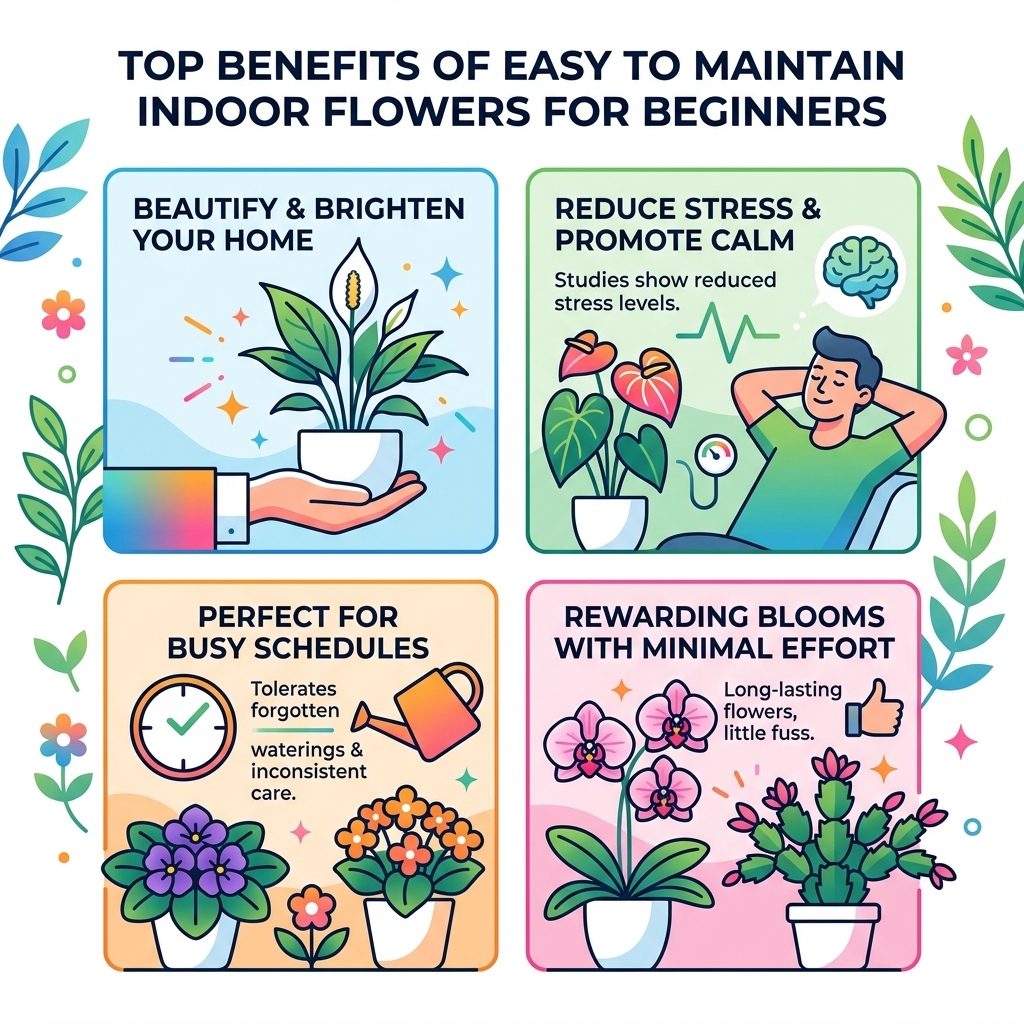
Top 10 Easy to Maintain Indoor Flowers for Beginners
Starting an indoor garden shouldn’t feel like a second job. At Futuro Ciencia, we believe that your home should be a tranquil oasis, not a source of stress. That is why we have curated a list of flowering plants that are resilient, beautiful, and remarkably patient with beginners.
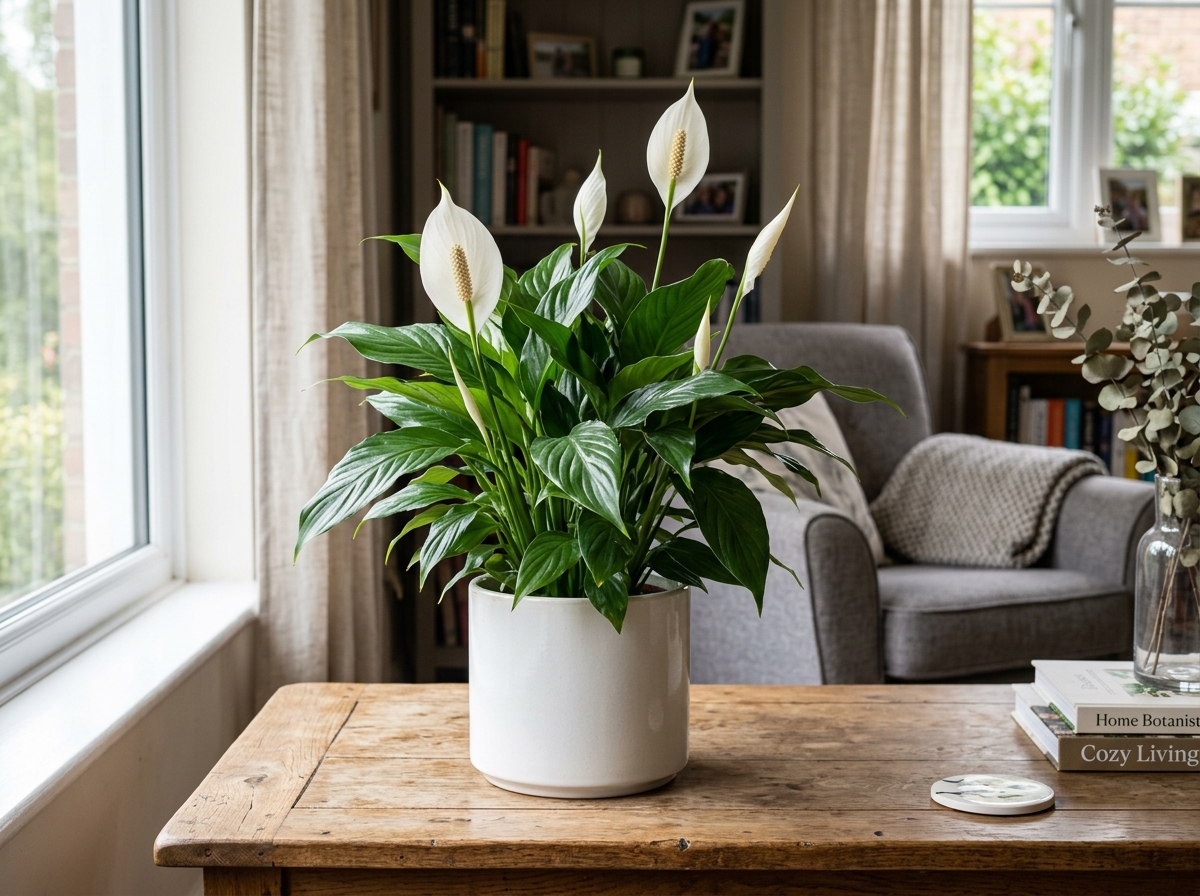
Peace Lily: The Ultimate Easy to Maintain Indoor Flowers Choice
If you are looking for a plant that communicates, the Spathiphyllum, or Peace Lily, is your best friend. It is famous for its “dramatic wilting”—when it is thirsty, the leaves collapse completely. Give it a drink, and within an hour or two, it stands tall again.
Beyond its communication skills, the Peace Lily is a champion of air purification. It helps remove toxins like benzene and formaldehyde from your indoor air. It thrives in low to medium indirect light, making it one of the most easy indoor plants for beginners who may not have sun-drenched windows. Just remember: while beautiful, they are toxic to pets if ingested.
African Violet: Easy to Maintain Indoor Flowers for Small Spaces
The Saintpaulia, or African Violet, is a nostalgic favorite for a reason. These compact plants are perfect for bookshelves or end tables. They offer continuous blooms in shades of purple, pink, and white.
The “secret” to keeping them happy is bottom watering. Their fuzzy leaves hate getting wet—water drops can cause permanent brown spots. Simply set the pot in a saucer of water for 20 minutes and let the roots drink what they need. Because they stay small and bloom reliably, they are excellent easy-to-grow-indoor-plants for apartment dwellers.
Anthurium and the Secret to Year-Round Blooms
Known as the Flamingo Flower, the Anthurium holds the title for the world’s longest-blooming plant. Those vibrant red “flowers” are actually waxy spathes (modified leaves) that can last for months.
To keep an Anthurium happy, place it in bright, indirect light. If the light is too low, it will stop blooming; if it’s too direct, the leaves will scorch. It’s one of those indoor-plants-that-need-little-care because it only needs watering when the top inch of soil feels dry.
Kalanchoe: The Colorful Succulent
The Kalanchoe is a durable succulent that produces clusters of tiny, star-shaped flowers. Because it stores water in its thick leaves, it is incredibly drought-tolerant. It is the perfect choice for the “botanically challenged” who might forget to water for a week or two. It prefers bright light and well-drained soil to prevent root rot.
Phalaenopsis Orchid: The “Beginner” Orchid
Don’t let the word “orchid” scare you. The Phalaenopsis, or Moth Orchid, is surprisingly hardy. Its blooms can last for three to four months at a time. The biggest mistake beginners make is overwatering. These plants grow in bark or moss, not dirt. A weekly soak and thorough drainage are all they need to thrive. For more tips on similar species, check out our guide on low-maintenance-flowering-indoor-plants.
Christmas Cactus: The Holiday Classic
Unlike desert cacti, the Christmas Cactus (Schlumbergera) is a tropical plant. It has no sharp spines and produces stunning tubular flowers in late fall or winter. It loves humidity and indirect light. It’s a long-lived plant that often gets passed down through generations because it is so difficult to kill.
Hoya: The Wax Plant
Hoyas are beloved for their thick, waxy foliage and umbrella-like clusters of fragrant flowers. They are semi-succulent, meaning they prefer to dry out between waterings. Hoyas actually like being slightly pot-bound, so you don’t have to worry about repotting them frequently. They are the definition of a “set it and forget it” flowering plant.
Crown of Thorns: The Resilient Bloomer
If you have a very sunny windowsill, the Crown of Thorns (Euphorbia milii) is a powerhouse. It is a succulent that can bloom almost year-round if it gets enough light. It is incredibly tough and handles dry indoor air with ease. Just be careful of the sap and the thorns if you have curious pets or children.
Bromeliad: Tropical Flair
Bromeliads bring an exotic, architectural look to any room. Many varieties have a central “cup” that you keep filled with water. They bloom once with a spectacular, long-lasting flower head and then produce “pups” (baby plants) at the base that you can grow into new plants.
Begonia: Cheerful and Versatile
Fiberous Begonias are excellent indoor performers. They provide a constant splash of color and have attractive, often asymmetrical foliage. They handle average indoor temperatures well and don’t require high humidity to stay healthy.
Essential Care Guide for Easy to Maintain Indoor Flowers
Even the hardiest plants need a solid foundation. If you want your easy to maintain indoor flowers to do more than just survive, follow these basic principles.
Lighting: The Energy Source
Most flowering plants need “bright, indirect light.” This means a spot near a window where the sun doesn’t hit the leaves directly.
- South-facing windows: Usually too hot; use a sheer curtain.
- North-facing windows: Great for Peace Lilies and African Violets.
- East/West windows: Ideal for most blooming plants.
Watering: The “Golden Rule”
The number one killer of houseplants is overwatering. Most of the plants on our list prefer to dry out slightly. A good rule of thumb is to stick your finger an inch into the soil. If it feels damp, wait. If it’s dry, it’s time for a drink. Always use pots with drainage holes to prevent water from sitting at the bottom, which leads to root rot.
Soil and Potting
Standard potting soil is often too heavy for indoor flowers. We recommend a mix that includes:
- Peat moss or Coco coir: To retain just enough moisture.
- Perlite or Pumice: To ensure the roots can breathe.
- Orchid Bark: Specifically for Orchids and Hoyas.
For those with a packed schedule, choosing hardy-indoor-plants-for-busy-people ensures that your greenery survives even when life gets in the way.
| Plant | Light Need | Watering Frequency | Best Feature |
|---|---|---|---|
| Peace Lily | Low to Medium | Weekly (when drooping) | Air Purifying |
| Anthurium | Bright Indirect | Every 1-2 weeks | Longest Blooms |
| African Violet | Medium Indirect | Weekly (bottom water) | Compact Size |
| Kalanchoe | Bright Direct | Every 2-3 weeks | Drought Tolerant |
| Hoya | Bright Indirect | Every 2 weeks | Fragrant Flowers |
Troubleshooting Common Issues with Flowering Houseplants
Even with easy to maintain indoor flowers, you might run into a few hiccups. Don’t panic! Most plant problems are easily fixed if caught early.
Yellow Leaves
This is the most common “SOS” signal from a plant.
- Overwatering: The most likely culprit. If the soil is soggy and leaves are yellowing, let it dry out completely.
- Nutrient Deficiency: If the plant hasn’t been fed in a year, it might need a boost.
- Natural Aging: Old leaves at the bottom of the plant will naturally turn yellow and die. Just snip them off!
No Blooms
If your plant looks healthy but won’t flower, it’s usually a lighting issue. Move it closer to a window (gradually) to give it the energy it needs to produce buds. Some plants, like the Peace Lily, are indoor-plants-that-survive-neglect but will stop flowering if kept in total darkness.
Pests: The Uninvited Guests
- Mealybugs: Look like tiny bits of white cotton. Wipe them off with a cotton swab dipped in rubbing alcohol.
- Spider Mites: Tiny webs on the undersides of leaves. Increase humidity and wash the leaves with mild soapy water.
- Fungus Gnats: Small flies that live in moist soil. Let the soil dry out more between waterings to break their life cycle.
For more detailed recovery steps, see our indoor-plant-care-tips-for-beginners.
Maximizing Blooms and Air Purification Benefits
To get the most out of your indoor garden, a little “extra credit” goes a long way.
Feeding for Flowers
While foliage plants can get by on standard soil, flowering plants appreciate a phosphorus-rich fertilizer. Look for a “Bloom Booster” formula. Feed your plants once a month during the spring and summer, and stop during the winter when growth slows down.
Humidity Hacks
Many flowering plants are tropical. Our homes are often too dry, especially in winter. You can increase humidity by:
- Grouping plants together: They create their own microclimate.
- Humidity trays: Fill a saucer with pebbles and water, then set the pot on top (ensure the pot isn’t sitting in the water).
- Misting: A quick spray of water can help, though it’s less effective than a tray.
Deadheading
This sounds aggressive, but it’s just the practice of snipping off faded flowers. This prevents the plant from wasting energy on seed production and encourages it to grow more blooms.
The Air Quality Connection
Plants are nature’s air filters. Beyond the Peace Lily, many indoor-plants-that-survive-neglect-2 help scrub the air of toxins like trichloroethylene. It’s a win-win: you get a beautiful home and cleaner air to breathe.
Frequently Asked Questions about Indoor Flowers
Which indoor flowers are safe for pets?
Safety is a major concern for “pawrents.” While Peace Lilies and Anthuriums contain calcium oxalate (which causes mouth irritation), there are plenty of non-toxic options. African Violets, Bromeliads, and Christmas Cacti are all pet-friendly. Always double-check your specific variety, and for more safety advice, read our indoor-plant-care-tips-for-busy-people.
How do I get my Kalanchoe or Christmas Cactus to rebloom?
These plants are “photoperiodic,” meaning they react to the length of the day. To trigger blooms, they need a period of “short days”—about 12 to 14 hours of total darkness every night for six weeks. You can achieve this by putting them in a closet or covering them with a box from 6 PM to 8 AM. A slight drop in temperature also helps stimulate bud development.
What are the best flowering plants for low-light rooms?
The Peace Lily is the undisputed king of low light. However, Anthuriums and African Violets can also tolerate lower light levels, though they will bloom less frequently. If your room has no windows at all, these plants can actually survive and even bloom under standard fluorescent office lighting!
Conclusion
Creating a vibrant, blooming indoor space doesn’t require a degree in botany or hours of daily maintenance. By selecting easy to maintain indoor flowers like the dramatic Peace Lily, the resilient Kalanchoe, or the ever-blooming Anthurium, you can enjoy the mental health benefits and aesthetic beauty of nature right in your living room.
At Futuro Ciencia, we are dedicated to helping you transform your space into a tranquil oasis. Whether you need a personalized growing guide or a simple care schedule to keep your new friends happy, we are here to support your journey. Ready to start your collection? Transform your space with our low-maintenance plant collections and discover how easy it is to grow a greener, brighter life.
