
Why Prayer Plant Watering Needs Are Easier to Master Than You Think
Prayer plant watering needs can feel confusing at first — but a few simple rules make it much easier to get right.
Quick answer:
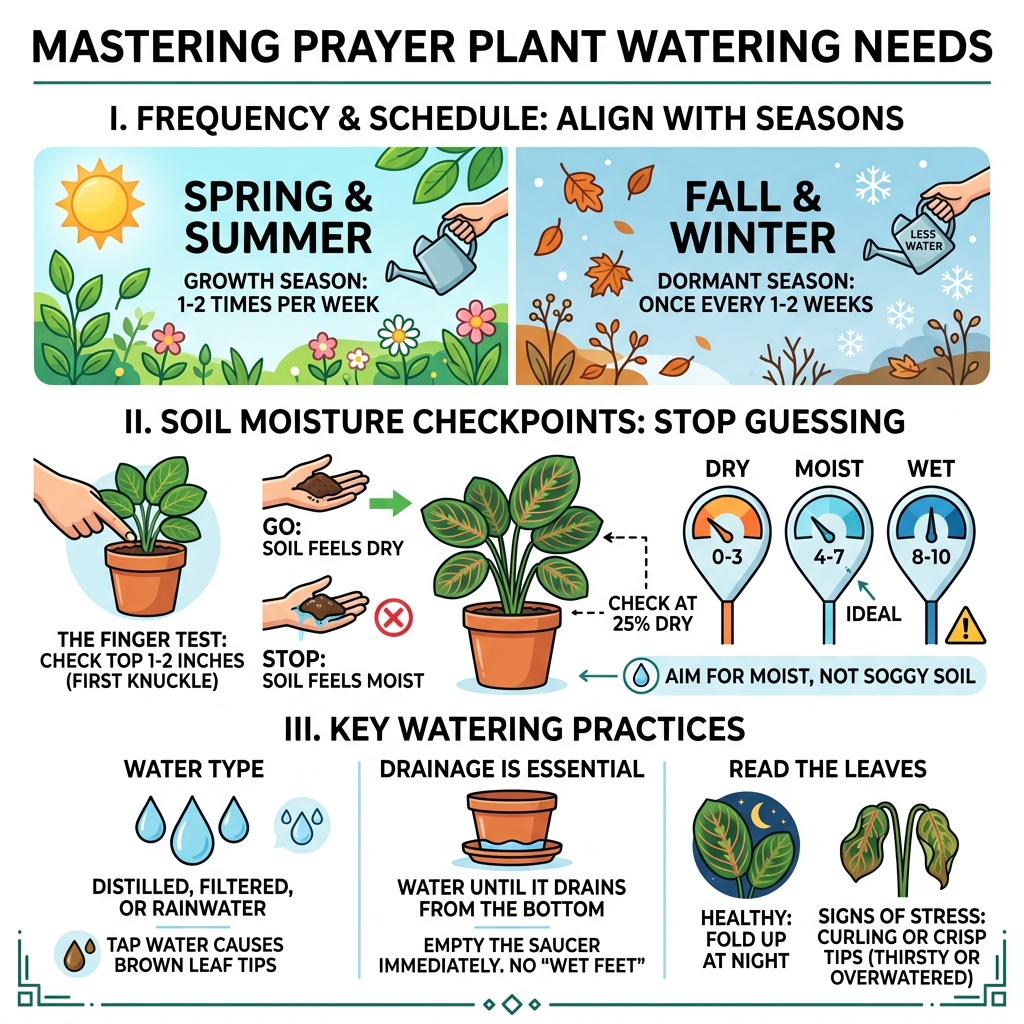
- Water when the top 1-2 inches of soil feel dry (stick your finger in to the first knuckle)
- In spring and summer, water once or twice a week
- In fall and winter, water once every 1-2 weeks
- Use distilled, filtered, or rainwater — tap water can cause brown leaf tips
- Water until it drains from the bottom, then empty the saucer
- Aim for soil that stays moist but never soggy
Prayer plants (Maranta leuconeura) are native to the tropical rainforests of Brazil. They’re used to warm, humid conditions with consistent moisture — not wet feet, not bone-dry soil.
The tricky part? They’re sensitive. Too much water causes root rot. Too little and the leaves curl and crisp up within two weeks.
The good news: your prayer plant actually tells you what it needs. Its leaves fold upward at night like hands in prayer — and when something is off with its water balance, you’ll see it in the foliage long before serious damage sets in.
This guide gives you the exact steps to read those signals and water with confidence.
Mastering Prayer Plant Watering Needs: The Finger Test and Beyond
At Futuro Ciencia, we believe that understanding your plant’s environment is the first step to a thriving indoor jungle. When it comes to prayer plant watering needs, the most common mistake is following a rigid calendar. Instead, we teach a “sensory” approach. Because your home’s humidity, light, and temperature change daily, your plant’s thirst does too.
The 25% Dry Rule
A golden rule for Marantaceae is to water when the total soil volume is approximately 25% dry. For most standard pots, this translates to the top 1 to 2 inches of soil.
The Finger (Knuckle) Test
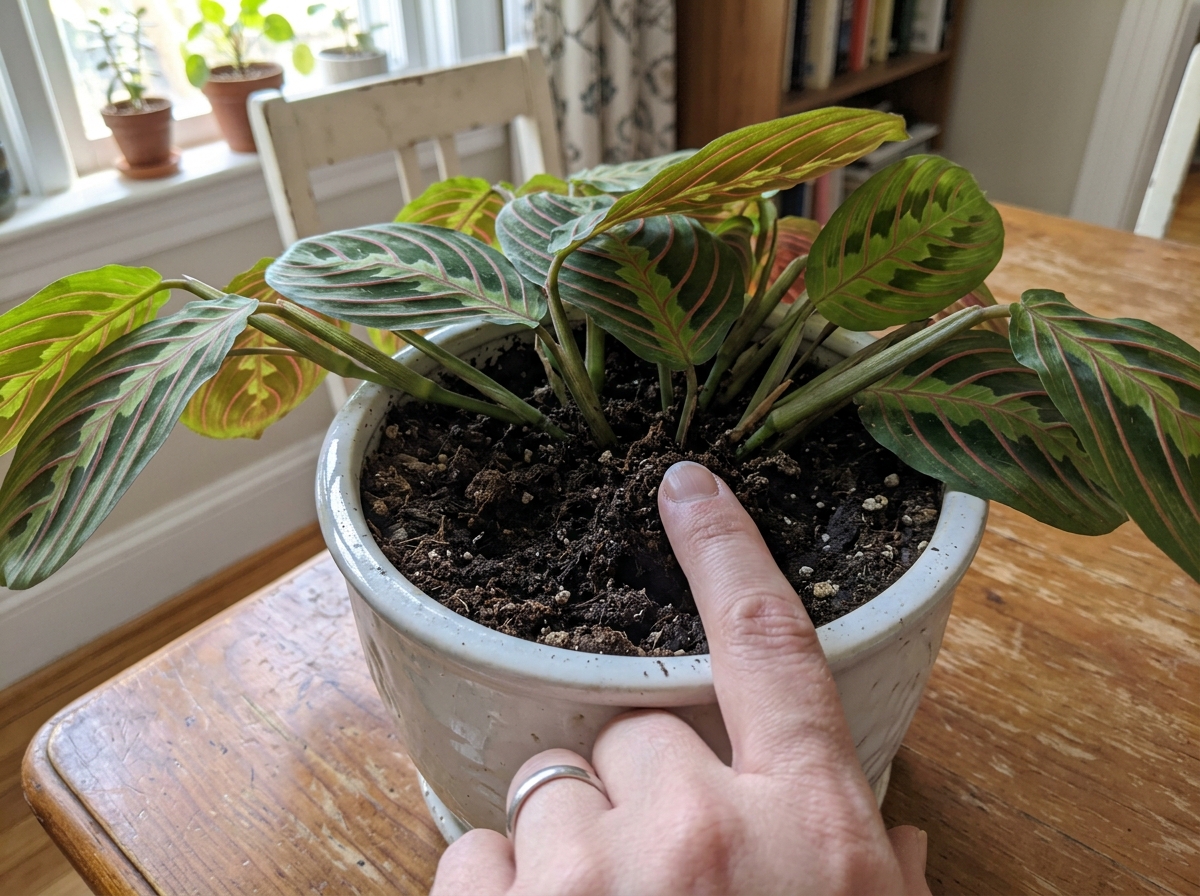
This is the most reliable low-tech method. Simply stick your index finger into the soil up to the first or second knuckle.
- If the soil feels damp and sticks to your finger: Wait.
- If the soil feels dry, cool, and crumbly: It’s time to water.
Advanced Checking Methods
If you want to move beyond the finger test, consider these techniques:
- The Pot Weight Test: Lift your plant right after a deep watering to feel its “heavy” weight. Lift it again a week later. When the pot feels significantly lighter, the water has been used or evaporated.
- Moisture Meters: These tools give you a numerical reading. For a prayer plant, you want the needle to sit in the “moist” range, just as it begins to dip toward “dry.”
- Visual Inspection: Look at the drainage holes at the bottom of the pot. If the soil visible through the holes looks bone-dry, your plant is likely suffering from underwatering.
Proper drainage is non-negotiable. Always ensure your pot has drainage holes to prevent the dreaded “wet feet” that leads to root rot. For more help setting up a consistent habit, check out our watering-schedule-for-indoor-plants and integrate it into your indoor-plant-care-routine.
How to Identify Prayer Plant Watering Needs by Leaf Signals
Your prayer plant is a living communicator. Its movement—a phenomenon called nyctinasty—is powered by water pressure (turgor pressure) in the joints of the leaves. When prayer plant watering needs aren’t met, the plant loses the ability to “pray” effectively.
- Leaf Curling: This is the plant’s way of reducing surface area to prevent further moisture loss. If the leaves are curled inward like straws, your plant is thirsty!
- Drooping Foliage: While these plants naturally move up and down, a limp, lifeless droop that doesn’t recover at night usually indicates either extreme thirst or root damage from overwatering.
- Brown, Crispy Edges: This is often a sign of low humidity or a reaction to chemicals in tap water. However, if the browning is accompanied by dry soil, it’s a clear cry for hydration.
- Yellowing Leaves: Often a sign of overwatering. If the soil is soggy and the leaves are turning yellow (starting from the bottom), the roots are likely suffocating.
- Leaf Spots: Dark or tan spots can indicate fungal issues from water sitting on the leaves or inconsistent soil moisture.
Understanding these signals helps you avoid common-indoor-plant-care-mistakes that lead to plant loss.
Seasonal Adjustments for Prayer Plant Watering Needs
Just like we change our wardrobe for the seasons, your plant changes its metabolic rate.
Spring and Summer (The Growing Season): During these months, your prayer plant is hard at work producing new leaves. High light levels and warmer temperatures (ideally 68–85°F) mean the soil dries out faster. You may find yourself watering every 3–5 days. This is also the time to fertilize every 2–4 weeks at half-strength to support that growth.
Fall and Winter (The Dormancy Period): As light fades and temperatures drop, the plant enters a rest phase. Growth slows down significantly. In winter, evaporation rates are lower, and the plant “drinks” less. You should allow the soil to dry out a bit more—about the top 2 inches—before watering. Overwatering in winter is the leading cause of indoor plant death. For specific tips on navigating the cold months, see our guide on indoor-plant-care-during-winter.
The Best Water Types for Sensitive Marantaceae
Not all water is created equal. Prayer plants are notoriously “divas” when it comes to water quality. They are highly sensitive to the chlorine, fluoride, and dissolved minerals found in most municipal tap water.
| Water Type | Pros | Cons |
|---|---|---|
| Distilled Water | Purest option; no minerals or chemicals. | Must be purchased; lacks natural minerals. |
| Rainwater | Perfectly pH-balanced; free; natural. | Hard to collect in apartments; can contain pollutants. |
| Filtered Water | Removes most chlorine and heavy metals. | Filter quality varies; doesn’t always remove fluoride. |
| Tap Water | Free and convenient. | Contains salts/fluoride that cause brown leaf tips. |
Expert Tip: If you must use tap water, let it sit in an open container for 24 hours before using it. This allows the chlorine to dissipate. However, note that fluoride does not evaporate and will still build up in the soil over time. Using slightly warm water (room temperature) is best for rhizome health, as ice-cold water can shock the tropical root system. For more foundational advice, explore our indoor-plant-care-tips-for-beginners.
Creating the Perfect Environment: Humidity and Soil Drainage
Watering isn’t just about what you pour into the pot; it’s about the moisture in the air. In their native Brazilian rainforests, prayer plants enjoy humidity levels of 60% to 80%. Most homes sit at a dry 30%.
Boosting Humidity
- Humidifiers: The most effective method. Placing your plant near a humidifier set to 65% will result in lush, spot-free leaves.
- Pebble Trays: Fill a shallow tray with pebbles and water, then set the pot on top (ensure the pot isn’t sitting in the water). As the water evaporates, it creates a humid microclimate.
- Grouping Plants: Plants release moisture through their leaves (transpiration). Grouping them together creates a “mini-jungle” effect that raises local humidity.
The Right Soil Mix
The best soil for prayer plant watering needs is one that retains moisture but allows excess water to escape. A mix of 75% high-quality potting soil and 25% perlite or coarse sand is ideal. Some enthusiasts swear by adding peat moss or coco coir to help maintain that “evenly moist” feel.
Pot Size and Type
- Plastic/Ceramic: These retain moisture longer.
- Terra Cotta: These are porous and “breathable,” meaning they wick moisture away from the soil. If you use terra cotta, you will need to water your prayer plant much more frequently.
Keep your maintenance on track with our indoor-plant-maintenance-checklist and see how to adapt these tips for smaller spaces in our indoor-plant-care-for-apartments guide.
Essential Troubleshooting for Prayer Plant Watering Needs
If you find your plant looking a little sad, don’t panic. Most watering issues are reversible if caught early.
Recovering from Overwatering
If the soil is a swamp and the stems feel mushy, you likely have root rot.
- Remove the plant from its pot.
- Rinse the roots and trim away any black, slimy, or foul-smelling sections.
- Repot in fresh, dry, well-draining soil.
- Wait a few days before watering lightly. According to scientific research on soil moisture and root health, aeration is just as important as hydration; roots need oxygen to survive.
Reviving an Underwatered Plant
If the soil has pulled away from the edges of the pot and the leaves are crispy:
- Use the Deep Watering Technique. Place the pot in a sink filled with a few inches of water and let it soak from the bottom up for 20 minutes.
- Mist the leaves to provide immediate relief to the foliage.
- Resume a regular schedule, checking the soil every 2–3 days until the plant stabilizes.
For those with a packed schedule, our indoor-plant-care-tips-for-busy-people offers shortcuts to keep your plants healthy without the stress.
Frequently Asked Questions about Prayer Plant Care
How long can a prayer plant go without water?
Generally, a prayer plant will show signs of distress (curling and drooping) within two weeks. By the three-week mark without any water, the plant will suffer significant leaf loss and rhizome damage. While the rhizomes store some nutrients, they aren’t as hardy as succulents.
Why are my prayer plant leaves turning yellow?
The most common culprit is overwatering. When the soil stays too wet, oxygen cannot reach the roots, leading to chlorosis (yellowing). Other causes include poor drainage, nitrogen deficiency, or sudden temperature drops below 55°F.
Should I mist my prayer plant leaves daily?
While many people enjoy misting, it only provides a very temporary boost in humidity. If done too late in the evening, water can sit on the leaves and encourage fungal diseases. We recommend using a humidifier or grouping plants together for a more consistent and safer humidity boost.
Conclusion
Mastering prayer plant watering needs is a journey of observation. By ditching the “once-a-week” habit and instead using the finger test, monitoring leaf signals, and providing high-quality water, you can transform your Maranta into a vibrant centerpiece.
At Futuro Ciencia, we’re here to help you grow your confidence along with your plants. Whether you’re a beginner or a seasoned collector, a little attention to detail goes a long way in creating your own tropical oasis. Ready to take the next step? Download our indoor-plant-care-schedule to keep your leafy friends thriving all year long!
