
The Dark Arts of Black Magic Colocasia Care
What Every Indoor Grower Needs to Know About Black Magic Colocasia
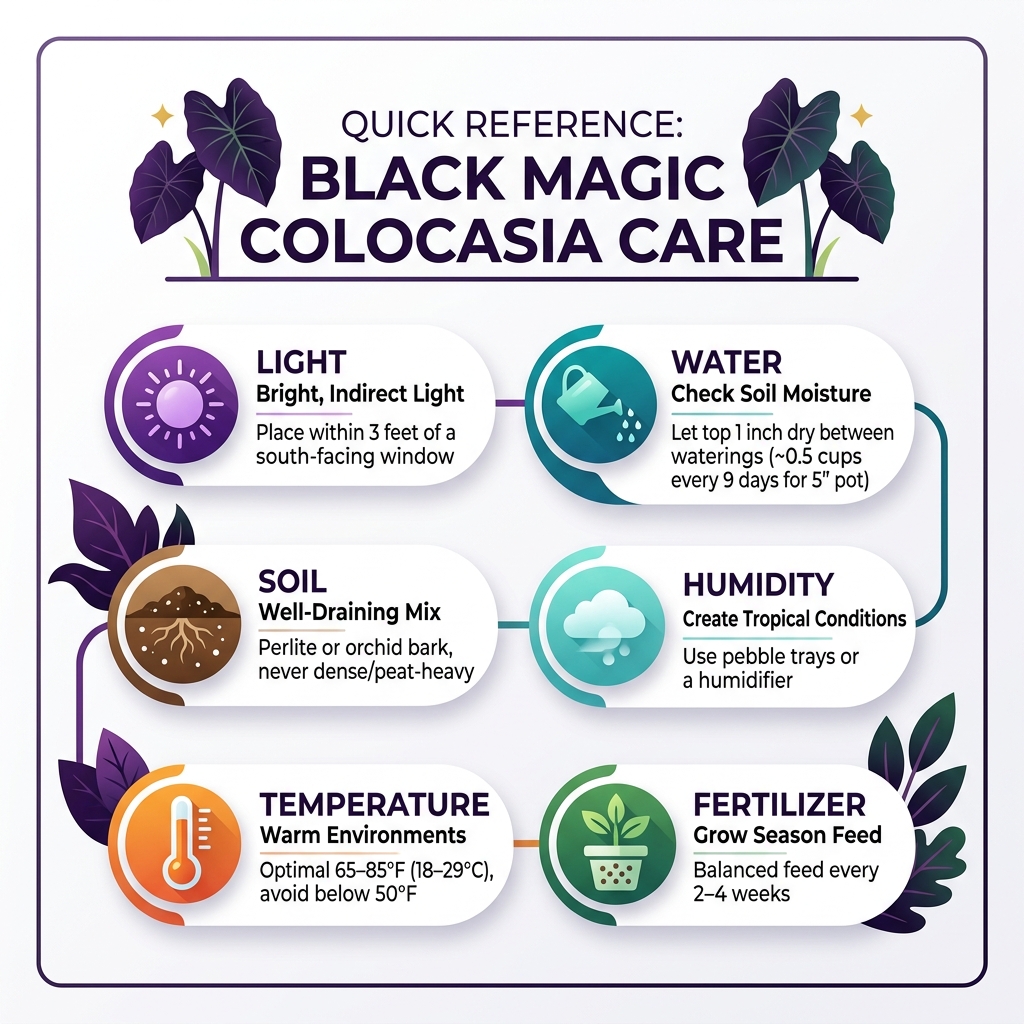
Black magic colocasia indoor care comes down to six core needs you have to get right from day one:
- Light: Bright, indirect light within 3 feet of a south-facing window
- Water: About 0.5 cups every 9 days for a 5-inch pot; let the top inch dry between waterings
- Soil: Well-draining mix with perlite or orchid bark — never dense, peat-heavy soil
- Humidity: Pebble trays or a humidifier to mimic tropical conditions
- Temperature: Keep it between 65–85°F (18–29°C); never let it drop below 50°F
- Fertilizer: Balanced feed every 2–4 weeks during the growing season
Get those six things right and this plant will reward you with some of the most dramatic foliage you can grow indoors.
Colocasia esculenta ‘Black Magic’ — also called elephant ears or taro — is a tropical perennial native to Southeast Asia. Its heart-shaped leaves start green and deepen into a smoky, near-black purple as they mature. Indoors, leaves can reach up to 2 feet long, and the whole plant can grow 3–5 feet tall.
That size and drama is exactly why people love it. But it’s also why getting the care wrong hurts fast.
This plant does not forgive soggy soil, cold drafts, or forgotten watering the way a succulent might. It has real preferences — closer to a tropical jungle than a windowsill herb — and those preferences need to be respected consistently.
The good news? Once you understand what it actually needs, the routine is straightforward. Even with a busy schedule, you can keep a Black Magic Colocasia thriving indoors.
Black magic colocasia indoor care terms to remember:
Essential Light and Temperature for Black Magic Colocasia Indoor Care
Finding the right spot for your Colocasia is the first step toward success. Unlike some of its cousins that can tolerate dim corners, the Black Magic variety is a sun-seeker. In its native tropical habitat, it basks in high-intensity light, and we must do our best to replicate that in our living rooms.
The “Golden Rule” for black magic colocasia indoor care is the 3-foot rule: place your plant less than 3 feet from a south-facing or east-facing window. This ensures it receives enough energy to maintain those massive leaves. If the plant is too far from a light source, it will become “leggy,” stretching its stems toward the window in a desperate search for sun, which often leads to the stems snapping under the weight of the foliage.

While it loves light, be careful with direct, harsh afternoon sun through glass, which can act like a magnifying glass and scorch the leaves. If you notice crispy, bleached spots, move it back slightly or use a sheer curtain. For those of us living in darker spaces, check out our guide on indoor plant care for low light or consider supplemental grow lights.
Temperature is the other half of the environmental equation. We recommend keeping your home between 65°F and 85°F (18–29°C). These plants are incredibly frost-tender. If temperatures dip below 50°F, the plant may enter a forced dormancy or suffer cold stress, characterized by drooping and yellowing. Understanding indoor plant light requirements is essential to balancing these tropical needs.
Optimizing Sunlight for Deep Purple Pigmentation
Have you ever wondered why some Black Magic plants look deep obsidian while others look muddy green? It all comes down to anthocyanins—the pigments that give the plant its dark color. These pigments act like a “sunscreen” for the plant.
To get that deep, smoky purple, the plant needs high-quality light. If your indoor space is naturally dim, the plant will produce more chlorophyll to catch what little light is available, turning the leaves green. If this happens, we suggest using a full-spectrum LED grow light for 12–14 hours a day to restore that “Black Magic” look.
Managing Indoor Microclimates and Drafts
Indoors, we often deal with “microclimates” that can sabotage our plants. A spot might look perfect, but if it’s directly under an AC vent or next to a drafty winter window, your Colocasia will struggle. Forced air from heaters or air conditioners is incredibly drying, which is the enemy of a plant that loves “wet feet.”
When practicing indoor plant care for apartments, keep your Colocasia away from high-traffic doorways where cold gusts occur. Consistency is key; a stable, warm, and humid environment will prevent the leaf drop often associated with environmental shock.
Mastering Hydration: Watering and Humidity Secrets
Watering a Black Magic Colocasia is a balancing act. While they are known for loving boggy conditions outdoors—sometimes even growing in standing water—indoor pots are a different story. In a container, stagnant water can quickly lead to root rot.
For a standard 5-inch pot not receiving direct, scorching sun, a good baseline is 0.5 cups of water every 9 days. However, we always recommend the “finger test.” Stick your finger about an inch into the soil; if it feels dry, it’s time to drink. If it’s still damp, wait a day or two.
| Sign | Overwatering | Underwatering |
|---|---|---|
| Leaves | Yellowing, mushy, or “weeping” | Crispy edges, browning, drooping |
| Stems | Soft, like overcooked spaghetti | Limp but dry to the touch |
| Soil | Smells musty or looks moldy | Pulling away from the pot edges |
| Roots | Brown, slimy, or “brownie-like” | Brittle and dry |
Water quality also matters. Many growers find that tap water chlorine can cause leaf tip burn. If you must use tap water, let it sit out overnight to allow the chemicals to evaporate. Better yet, use rainwater or distilled water to keep those purple leaves pristine. For more help, see our watering schedule for indoor plants.
Avoiding Self-Watering Pot Pitfalls
Self-watering pots seem like a dream for a water-loving plant, but they can be a trap for the Black Magic variety. These systems often rely on wicks that keep the soil constantly saturated. Without enough light to drive photosynthesis and “pull” that water through the plant, the soil stays too wet, suffocating the roots.
If you use these pots, ensure your soil mix is incredibly airy (lots of perlite!) or shorten the wicks to prevent the bottom of the pot from becoming a swamp. If you suspect your plant is drowning, check out our indoor plant root rot solutions.
Creating a Tropical Atmosphere Indoors
Humidity is the “secret sauce” for black magic colocasia indoor care. These plants crave 60% humidity or higher. Standard indoor air, especially in winter, can hover around 20–30%, which leads to “crunchy” leaf edges.
To fix this, we recommend:
- Pebble Trays: Fill a tray with pebbles and water, then set the pot on top (ensure the pot isn’t sitting in the water).
- Humidifiers: A small ultrasonic humidifier nearby works wonders.
- Grouping: Place your Colocasia near other plants to create a shared humid microclimate.
- Misting: While less effective than a humidifier, regular misting can provide a temporary boost.
Maintaining a solid indoor plant care routine that includes humidity checks will keep your elephant ears looking lush. You can find more humidity tips for houseplants on our blog.
The Foundation: Soil, Pots, and Preventing Root Rot
The right container and soil are your first line of defense against the dreaded root rot. For a Black Magic Colocasia, you want a pot that is at least 12 inches in diameter to allow the rhizome (the bulb-like root) room to expand. Drainage holes are non-negotiable!
The soil should be rich but fast-draining. We suggest a mix of 50% high-quality potting soil, 25% perlite, and 25% orchid bark or coco coir. This creates the “moist but airy” environment the roots love. Avoid heavy peat-based soils that hold onto water like a grudge. The ideal pH for these plants is slightly acidic to neutral, between 5.5 and 7.0.
Choosing the best soil for indoor plants is vital, but so is recognizing and remedying root rot early. If your plant smells like a swamp or stops growing despite perfect light, it’s time to check the roots.
When to Upgrade Your Black Magic Colocasia Pot Size
These plants are fast growers. We recommend repotting once a year or whenever the plant doubles in size—whichever comes first. If you see roots circling the bottom of the pot or poking out of the drainage holes, your plant is “root-bound.”
When you move up, only go 2 inches larger in diameter. A pot that is too big will hold more soil than the plant can use, leading to—you guessed it—more moisture issues. Learn how to repot indoor plants properly to avoid transplant shock, and check our solutions for overcrowded roots if your plant has become a giant.
Advanced Maintenance: Fertilizing, Pruning, and Propagation
Because they grow such massive leaves so quickly, Colocasias are “heavy feeders.” They need a lot of fuel. During the growing season (spring through late summer), we recommend fertilizing every 2–4 weeks.
A balanced, water-soluble fertilizer with a 10-10-10 NPK ratio works well. Many indoor enthusiasts also swear by fish fertilizer or seaweed extract, which provides micronutrients without the risk of salt buildup. Always dilute your fertilizer to half-strength for indoor plants to prevent “fertilizer burn.” You can explore fertilizing houseplants naturally for more organic options.
Pruning is also part of the job. As new leaves emerge from the center, older, outer leaves will naturally turn yellow and die. This is normal! Simply use sterilized shears to snip the stem near the base. This directs the plant’s energy toward new growth. For more techniques, see our pruning tips for indoor plants.
Propagating Black Magic Colocasia Indoors
The easiest way to get “free” plants is through rhizome division. As your Colocasia matures, it will produce “offsets” or “pups”—miniature plants growing from the base of the parent.
When you repot in the spring, gently shake off the soil and look for these offsets. If they have their own root system, you can carefully snip them away from the main corm using a sterile knife. Plant them in their own small pots with a fresh mix, and you’ve just expanded your indoor jungle! This makes them one of the more rewarding easy indoor plants for beginners to multiply.
Troubleshooting and Overwintering Your Elephant Ear
Even with the best black magic colocasia indoor care, pests can occasionally crash the party. Indoors, the most common culprits are spider mites, aphids, and whiteflies.
Spider mites love the dry air of our homes. Look for tiny, silken webs on the undersides of leaves. If you find them, isolate the plant immediately. We recommend treating the leaves with neem oil or an insecticidal soap, making sure to hit every nook and cranny.
You should also watch for “Taro Leaf Blight,” which appears as fuzzy growths or spotting. Good air circulation is your best friend here. If you notice issues, refer to our indoor plant fungus treatment guide and our leaf spotting guide for identification.
Managing Winter Dormancy and Corm Storage
In the winter, your Colocasia might decide it’s time for a nap. As light levels drop, growth will slow, and leaves may die back. This is “dormancy.”
If you want to keep the plant active, you’ll need grow lights and warmth. However, many growers choose to let the plant rest. To do this:
- Reduce watering significantly (only when the soil is very dry).
- Stop fertilizing.
- If the foliage dies back completely, you can dig up the corm, cut the stems to about 6 inches, and store it in a cool, dry place (45–50°F) in a box of peat moss or coco coir until spring.
Check out our full guide on indoor plant care during winter for more seasonal tips.
Frequently Asked Questions about Black Magic Colocasia Indoor Care
Is tap water safe for Black Magic Colocasia indoor care?
While it won’t kill the plant immediately, the chlorine and fluoride in tap water can lead to unsightly brown tips on the leaves. We recommend letting tap water sit in an open container for 24 hours before use, or using filtered water to keep the foliage pristine. For more basics, see our indoor plant care tips for beginners.
How large can a Black Magic Colocasia grow indoors?
Indoors, the plant typically reaches 3 to 5 feet in height. The leaves themselves can grow up to 2 feet long! However, the size is often limited by the pot; a smaller pot will keep the plant more manageable. If you have a busy life, these can be hardy indoor plants for busy people if you give them the space they need.
Why are my Black Magic Colocasia leaves turning green?
This is almost always a light issue. The plant produces more green chlorophyll to compensate for low light levels. To bring back the dark purple, move the plant closer to a south-facing window or invest in a grow light. Keeping a consistent indoor plant care schedule helps you track these changes.
Conclusion
At Futuro Ciencia, we believe that bringing a piece of the tropics into your home is one of the best ways to create a tranquil oasis. The Colocasia ‘Black Magic’ is more than just a houseplant; it’s a living sculpture that changes and grows with you. While black magic colocasia indoor care requires a bit more attention than your average pothos, the reward of those deep, obsidian leaves is well worth the effort.
By following our schedules and guides, you can master the “dark arts” of this stunning plant and transform your space into a lush, purifying retreat. Ready to take your indoor garden to the next level? Transform your space with expert indoor plant care and let us help you keep your green (and purple!) friends thriving.
