
The Ultimate Guide to Indoor Plant Care
Why Indoor Plant Care Is Simpler Than You Think
Indoor plant care comes down to five core needs: light, water, soil, temperature, and humidity. Get these right, and most houseplants will thrive.
Quick answer — the 5 essentials:
| Need | What Most Plants Want |
|---|---|
| 💡 Light | Bright, indirect light (4–6+ hours/day) |
| 💧 Water | When the top 1 inch of soil feels dry |
| 🪴 Soil | Well-draining, soilless potting mix |
| 🌡️ Temperature | 65–75°F (min. 55°F) |
| 💨 Humidity | 40–60% relative humidity |
There’s something almost magnetic about filling your home with greenery. Plants don’t just look good — research shows they reduce stress, boost mood, improve focus, and even filter indoor air pollutants.
But for most busy homeowners, the reality looks different. A forgotten watering here, a windowless corner there, and suddenly your beautiful pothos is drooping and your snake plant is mushy at the base.
The good news? Most houseplants are surprisingly forgiving. The average indoor plant lives 2 to 5 years — and with just a little consistent attention, many will outlast that estimate by years.
The biggest myth in plant care is that you need a green thumb. You don’t. You just need to understand what your plant is trying to tell you — and this guide will show you exactly how to listen.
Mastering the Fundamentals of indoor plant care
At Futuro Ciencia, we believe that successful indoor plant care starts with a shift in perspective. Instead of seeing a plant as a decorative object, we should view it as a living immigrant from a specific part of the world. Most of our favorite roommates—like the Monstera or the Peace Lily—originate from the humid, dappled shade of tropical rainforests. Others, like Aloe or Echeveria, hail from arid deserts.
To help them thrive, we must mimic their native habitats. This doesn’t mean turning your living room into a swamp; it means practicing the “Moderation Principle.” As we often say, everything in moderation (except maybe cake—you always need more cake!). Most plant deaths occur because of “too much” rather than “too little.” Too much water, too much direct sun, or too much fertilizer can be far more damaging than a week of neglect.
Understanding the basics of Houseplant Care is the first step toward building a sustainable indoor jungle. Whether you are looking for more info about plant care for apartments or managing a large house, the rules remain the same: observe first, react second.
Optimizing indoor plant care Light Requirements
Light is the fuel for photosynthesis, and for most indoor gardeners, it is the most limiting factor. We often overestimate how much light a room actually receives. A spot just three feet away from a window can have 50% less light intensity than the windowsill itself.
Here is how we categorize light levels:
- High Light (Bright Direct): 6+ hours of sun. Best for cacti, succulents, and citrus.
- Medium Light (Bright Indirect): 4–6 hours of filtered sun. This is the “sweet spot” for most tropicals. Think of an East-facing window or a spot a few feet back from a South-facing one.
- Low Light: Less than 3 hours of indirect light. Plants like the Snake Plant or ZZ Plant survive here, but they grow slowly.
To ensure even growth, we recommend rotating your plants one-quarter turn every week. This prevents them from becoming “leggy” as they reach toward the glass. If your space is naturally dark, don’t worry—modern full-spectrum LEDs are a game-changer. You don’t necessarily need fancy purple grow bulbs; simple indoor plant light requirements can often be met with high-quality white LEDs. Just remember: even plants need sleep! Limit light exposure to a maximum of 16 hours a day to allow for natural respiration.
Watering Techniques and Signs of Stress
If we had a nickel for every plant lost to “kindness” (overwatering), we’d have a very large greenhouse. Overwatering is the #1 cause of houseplant failure. When soil is constantly wet, the roots can’t breathe. They literally suffocate, leading to the dreaded root rot.
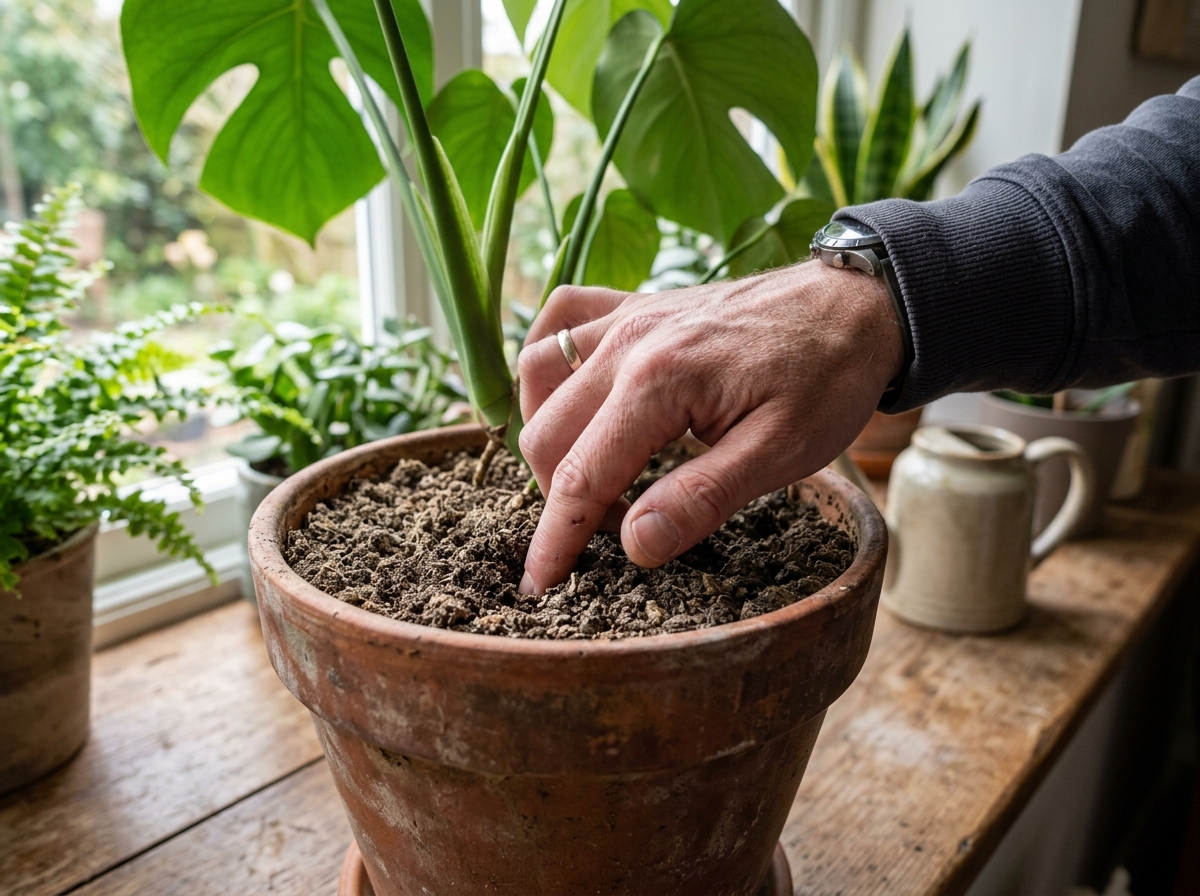
The most reliable tool for watering isn’t a high-tech sensor—it’s your index finger. Stick it two inches deep into the soil. If it feels damp, walk away. If it’s dry, it’s time for a drink.
Common Watering Signs:
- Underwatering: Leaves feel crispy, edges turn brown, and the entire pot feels light when lifted.
- Overwatering: Leaves turn yellow, stems feel mushy at the base, and you might notice a funky odor or “fungus gnats” hovering around.
For a deeper dive, check out our guide on how to revive dying houseplants. We generally recommend “bottom watering” for plants in nursery liners—place the pot in a tray of water for 30 minutes to let the soil wick up what it needs. Also, consider your water quality; while most plants handle tap water, sensitive varieties like Spider Plants or Calatheas prefer filtered or distilled water to avoid leaf tip burn from fluoride.
Creating the Perfect Environment: Soil, Pots, and Nutrition
The “dirt” you use matters immensely. We never recommend using garden soil for indoor plants; it’s too heavy and often contains outdoor pests. Instead, use a high-quality soilless potting mix. These are typically composed of peat moss or coco coir (for moisture), perlite or vermiculite (for aeration), and a bit of compost (for nutrients).
Choosing the right container is just as vital. Drainage holes are non-negotiable! If you have a beautiful decorative pot without a hole, use it as a “cache pot”—keep the plant in its plastic nursery liner and simply set it inside the pretty container.
| Pot Material | Pros | Cons |
|---|---|---|
| Terracotta | Porous, breathes well, prevents rot | Dries out very fast, heavy |
| Plastic | Lightweight, holds moisture longer | Easy to overwater, less “breathable” |
| Glazed Ceramic | Beautiful, sturdy | Heavy, often lacks drainage holes |
Finding the best soil for indoor plants ensures that the roots have the perfect balance of oxygen and moisture.
Feeding Your Plants for Growth
Think of fertilizer as a multivitamin, not a meal. Plants get their primary energy from light; fertilizer just provides the building blocks for new leaves and flowers. Most fertilizers use an NPK ratio (Nitrogen, Phosphorus, Potassium). Nitrogen boosts foliage, Phosphorus helps with blooms, and Potassium supports overall cell health.
We suggest fertilizing houseplants naturally or using a balanced water-soluble fertilizer at half-strength.
- Frequency: Only during the growing season (Spring and Summer).
- Dormancy: Stop feeding in the winter when the plant’s metabolism slows down.
- Pro Tip: If you see white crusty salt buildup on your pot, it’s time to flush the soil with plain water to prevent root burn.
Temperature and Humidity Control
Most houseplants are comfortable when you are. The ideal range is 65–75°F. However, they hate sudden changes. Avoid placing your green friends directly in front of air conditioning vents or heaters, which can cause “temperature shock” and leaf drop.
Humidity is the “secret sauce” for tropical plants. Most homes in winter have humidity levels as low as 10–15%, whereas a Monstera wants 50%+.
- The Misting Myth: Misting feels nice, but it only raises humidity for a few minutes.
- The Grouping Method: Grouping plants together creates a microclimate where they share transpired moisture.
- Pebble Trays: Fill a tray with pebbles and water, then set the pot on top (ensuring the bottom isn’t touching the water).
For more advanced setups, check our humidity tips for houseplants. Aim for that 40–60% sweet spot to keep leaves lush and prevent brown tips.
Long-Term Maintenance and Troubleshooting
Indoor plant care isn’t just about survival; it’s about maintenance. Just as we dust our shelves, we must dust our plants. A layer of dust on a leaf acts like a sunblock, preventing the plant from photosynthesizing efficiently. Wipe smooth leaves with a damp cloth or give them a gentle “shower” in the sink once a month.
Repotting is another milestone. You’ll know it’s time when you see roots circling the bottom or poking out of the drainage holes. When you how to repot indoor plants, only go up one to two inches in pot diameter. An oversized pot holds too much water, which can lead to rot.
Keep a pair of sharp, sanitized scissors handy. Pruning “leggy” growth encourages a bushier, healthier plant. Always sanitize your tools with rubbing alcohol between plants to prevent the spread of invisible pathogens. Refer to our indoor plant maintenance checklist to stay on top of these tasks.
Identifying and Treating Pests and Disease
Even the best plant parents face pests. The key is early detection.
- Fungus Gnats: Tiny black flies that love wet soil. Solution: Let the soil dry out and use yellow sticky traps.
- Mealybugs: White, cottony spots in leaf joints. Solution: Dab them with a Q-tip soaked in rubbing alcohol.
- Spider Mites: Fine webbing on the undersides of leaves. Solution: Increase humidity and use neem oil or insecticidal soap.
If you notice weird spots, you might be dealing with indoor plant fungus. Isolate the plant immediately to protect the rest of your collection. For a complete guide on “who’s who” in the bug world, see our article on indoor plant pests and how to remove them.
Essential indoor plant care for Winter and Summer
Plants have rhythms. In the summer, they are in “active mode”—they need more water, more food, and can handle more light. In the winter, they enter a period of semi-dormancy.
During indoor plant care during winter, you should:
- Reduce Watering: The soil stays wet longer because there is less sun and heat.
- Stop Fertilizing: The plant isn’t doing enough heavy lifting to need the extra nutrients.
- Boost Light: Since days are shorter, move plants closer to windows (but keep them away from cold drafts).
Choosing and Multiplying Your Green Roommates
Ready to expand? If you’re a beginner, start with “hardy” varieties that thrive on a bit of neglect. Snake Plants and Pothos are the gold standard here. If you have furry friends, make sure to check indoor plants for beginners with pets to ensure your new roommates are non-toxic.
One of the most rewarding parts of this hobby is propagation. You can turn one plant into ten!
- Cuttings: Pothos and Philodendrons can be rooted easily in a glass of water.
- Division: Snake plants and Spider plants can be pulled apart at the root to create separate pots.
To see what fits your aesthetic, you can meet the 50 most common houseplants in our visual guide. If you’re tight on space, explore our favorite indoor plants for small spaces.
Frequently Asked Questions about Indoor Plants
How do I know when to water my houseplants?
The “Finger Test” is king. Stick your finger 1–2 inches into the soil; if it’s dry, water. You can also judge by weight—pick up the pot when it’s freshly watered, then again a week later. A light pot usually means a thirsty plant.
Why are my plant’s leaves turning yellow?
This is the most common question in indoor plant care. Yellowing can be caused by overwatering (mushy leaves), underwatering (dry/yellow leaves), or even just natural aging (older bottom leaves dying off). Check the soil moisture first. If the soil is fine, it might be a nutrient deficiency or low light. See how to fix yellow leaves for a step-by-step diagnosis.
Which plants are best for low-light apartments?
The “Unkillables” include the Snake Plant, ZZ Plant, Pothos, and Peace Lily. These varieties are adapted to the forest floor and can handle the dimmer corners of your home. Explore more low light plants for apartments to brighten up your space.
Conclusion
At Futuro Ciencia, our mission is to help you transform your living space into a tranquil oasis. Indoor plant care shouldn’t be a source of stress—it should be a practice of patience and observation. By understanding the five pillars—light, water, soil, temperature, and humidity—you aren’t just keeping a plant alive; you’re cultivating a healthier, more vibrant home.
Every “black thumb” is just a green thumb that hasn’t practiced enough yet. Don’t be afraid to make mistakes; even the most expert horticulturists have lost a plant or two. The joy is in the journey of watching a new leaf unfurl or a cutting finally grow its first root.
Ready to dive deeper into specific varieties or advanced techniques? Explore our full category of indoor plant care guides and join our community of plant lovers today!
