
Why Your Snake Plant Watering Schedule Changes With the Seasons
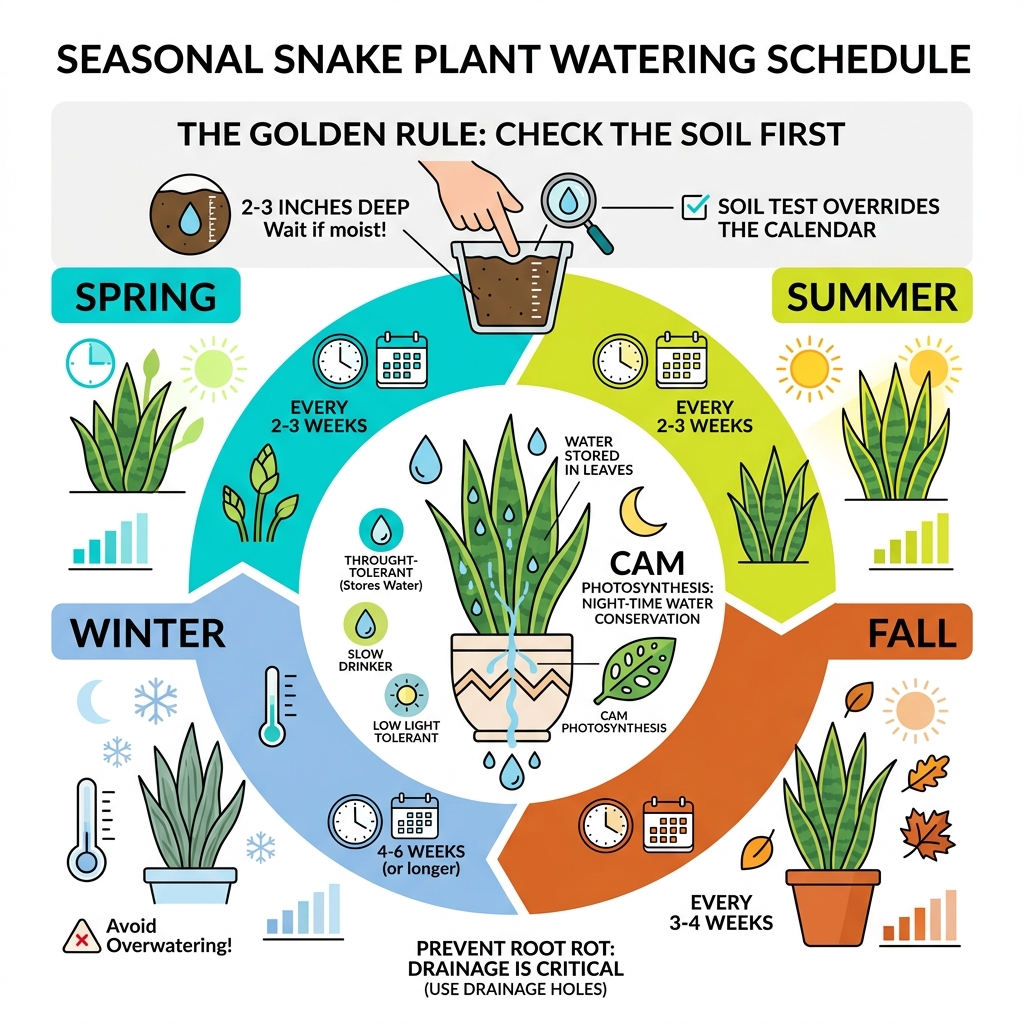
A good snake plant watering schedule follows one simple rule: only water when the soil is completely dry. Here’s a quick-reference guide before we dive deeper:
| Season | Watering Frequency |
|---|---|
| Spring & Summer | Every 2-3 weeks |
| Fall | Every 3-4 weeks |
| Winter | Every 4-6 weeks (or longer) |
The soil test always overrides the calendar. Stick your finger 2-3 inches into the soil. If you feel any moisture, wait.
Snake plants (Dracaena trifasciata) have a well-earned reputation for surviving neglect. They store water in their thick leaves and use a special process called CAM photosynthesis — opening their pores at night instead of during the day — to hold onto moisture far longer than most houseplants.
But here’s the thing: that drought tolerance is also their biggest risk.
Because snake plants need so little water, it’s easy to keep watering on autopilot — especially through the colder months. And that’s where things go wrong. Root rot causes 90% of snake plant deaths, and watering too frequently in winter is responsible for 75% of those root rot cases.
Winter changes everything. Lower light, cooler temperatures, and slower growth mean the soil stays wet far longer than it does in summer. What worked in July can kill your plant in December.
This guide walks you through exactly how to adjust your routine as the seasons shift — so your snake plant doesn’t just survive, it thrives.
Introduction
At Futuro Ciencia, we believe that every home deserves a touch of nature’s tranquility. The snake plant, or Dracaena trifasciata, is the ultimate companion for achieving that “tranquil oasis” feel without the high-maintenance drama. These plants are biological marvels. Native to the arid regions of West Africa and Southern Asia, they have evolved succulent characteristics that allow them to store water in their thick, upright leaves and underground rhizomes.
One of their coolest “superpowers” is Crassulacean Acid Metabolism (CAM) photosynthesis. While most plants open their stomata (pores) during the day to take in carbon dioxide—losing precious water to evaporation in the process—snake plants wait until the cool of the night. This adaptation makes them incredibly drought-tolerant, but it also means they are essentially “drinking” very slowly. Understanding this biology is the first step to mastering your snake plant watering schedule.
The Golden Rule: When to Water Your Snake Plant
If you remember only one thing from this guide, let it be this: The finger test is your best friend. We often see new plant parents falling into the “calendar trap,” watering every Monday regardless of the weather. This is a recipe for disaster.
To accurately check if your plant is thirsty, stick your finger about 2 to 3 inches deep into the soil. If the soil feels even slightly damp or cool, walk away. Your snake plant is perfectly happy. Only when the soil is bone-dry all the way down should you reach for the watering can. This method is a cornerstone of any effective watering-schedule-for-indoor-plants.
For those who prefer a more high-tech approach, a moisture meter can be a great tool. However, snake plants prefer much drier conditions than your average fern. If you’re using a meter, wait until it hits the lowest “dry” reading (usually a 1 or 2) before adding water. For more foundational advice, check out our indoor-plant-care-tips-for-beginners. Always ensure your pot has a drainage hole; without it, the water has nowhere to go, leading to “wet feet” and inevitable decay.
Seasonal Shifts: Your Snake Plant Watering Schedule
In the wild, plants respond to the rhythm of the sun and rain. Even inside your climate-controlled living room, your snake plant knows what season it is. As the light levels change, so does the plant’s metabolic rate. We recommend integrating these shifts into your broader indoor-plant-care-routine to keep your green friends in peak condition.
| Factor | Summer (Growing Season) | Winter (Dormant Season) |
|---|---|---|
| Light Levels | High/Bright | Low/Short Days |
| Growth Rate | Active | Slow/Dormant |
| Watering Frequency | Every 2-3 weeks | Every 4-6+ weeks |
| Evaporation Rate | Fast | Very Slow |
According to Scientific research on Dracaena trifasciata environmental adaptations, these plants significantly reduce their activity when light levels drop, requiring far less hydration to maintain their structure.
Determining Your Summer Snake Plant Watering Schedule
During the spring and summer, your snake plant is in its active growth phase. With more sunlight hitting the leaves, the plant performs more photosynthesis and consumes water more quickly. If your plant is sitting in a sunny, south-facing window, you might find yourself watering every 14 to 21 days.
This is also the time when the plant is most efficient at nutrient uptake. Because they are low-water-indoor-plants, they don’t need much, but a little drink during the height of summer helps them produce those iconic tall, architectural leaves we love.
Adjusting the Snake Plant Watering Schedule for Winter Dormancy
When winter arrives, the “less is more” philosophy becomes vital. The combination of shorter days and cooler indoor temperatures (especially near windows) causes a metabolic slowdown. Evaporation rates plummet.
This is the danger zone: 75% of root rot cases occur because of overwatering in winter. We suggest checking your indoor-plant-maintenance-checklist and marking your snake plants for a “deep freeze” on watering. You might only water once every 6 weeks, or even once every two months if your home is particularly cool.
Factors That Influence Watering Frequency
No two homes are exactly alike, which means your snake plant watering schedule might look different from your neighbor’s. Several environmental factors play a role in how fast the soil dries out:
- Pot Material: Terracotta is porous and “breathes,” pulling moisture out of the soil. Plastic or glazed ceramic pots trap moisture inside. If your plant is in terracotta, it will need water more often.
- Light Exposure: A plant in a dark corner stays wet for a long time. A plant in bright, indirect light processes water much faster.
- Pot Size: A small plant in a massive pot is a major risk for overwatering because there is too much soil holding onto water that the roots can’t reach.
- Soil Composition: We always recommend a well-draining succulent or cactus mix. Standard potting soil holds too much water for these low-water-indoor-plants-2.
- Rootbound Status: If your plant is “rootbound” (the pot is full of roots and very little soil), it may actually need water more frequently because there isn’t enough soil left to hold moisture.
Snake plants are famous indoor-plants-that-survive-neglect, but understanding these nuances helps you move from “surviving” to “thriving.”
Troubleshooting: Signs of Overwatering and Underwatering
Even the best plant parents make mistakes! The key is recognizing-and-remending-root-rot-in-indoor-plants before it’s too late.
Identifying Overwatering and Root Rot
Overwatering is the #1 killer of snake plants, boasting a tragic 90% death rate if left unchecked. Look for these red flags:
- Yellowing leaves: Starting from the base.
- Mushy stems: If the base of the leaf feels soft or squishy, rot has set in.
- Fungus gnats: These tiny black flies love damp soil.
- Smell: A swampy, sulfurous odor coming from the soil indicates rotting roots.
If you suspect rot, you must act fast. Use our indoor-plant-root-rot-solutions to save your plant. This usually involves removing the plant from the pot, trimming away black, slimy roots, and repotting in fresh, dry soil. Avoid these common-indoor-plant-care-mistakes by always checking the soil first. If you notice your indoor-plant-root-rot-solutions-2 aren’t working, you may need to take a leaf cutting to propagate a new, healthy plant. For more detailed steps, see indoor-plant-root-rot-solutions-3.
Recognizing Signs of Underwatering
While harder to do, you can underwater a snake plant. If you’ve ignored it for three months, you might notice:
- Wrinkled leaves: The leaves lose their plumpness and look shriveled.
- Brown, crispy tips: A sign that the plant is pulling moisture from its extremities to survive.
- Compacted soil: The soil pulls away from the edges of the pot, becoming hard like a brick.
If you see these signs, don’t worry—recovery is usually easy. Give the plant a thorough soak. If the soil has become hydrophobic (repelling water), you may need to use the “bottom watering” method described below. Check out when-indoor-plant-leaves-droop-causes-and-solutions for more on why leaves lose their turgidity. These are indoor-plants-that-survive-neglect-2 for a reason; they are very forgiving of a dry spell! Just try to avoid making these common-indoor-plant-care-mistakes-2 a habit.
Best Practices for Watering Success
To ensure your snake plant watering schedule is a success, follow these expert tips:
1. The Method Matters
- Top Watering: Pour water at the base of the plant, avoiding the center of the “rosette” (where the leaves meet). Water trapped in the center can cause crown rot.
- Bottom Watering: This is often preferred by experts. Place the pot in a tray with an inch of water and let it sit for 15-20 minutes. The soil wicks up exactly what it needs. This is especially helpful for rehydrating compacted soil.
2. Water Quality Snake plants can be sensitive to the chlorine and fluoride in tap water, which often causes those pesky brown tips. Using filtered water or rainwater is ideal. If you must use tap water, let it sit out overnight to allow the chemicals to dissipate.
3. Temperature Always use room-temperature water. Ice-cold water can shock the roots of these tropical natives.
4. The Clean-Up Never let your plant sit in a saucer full of water for more than 30 minutes. After watering, wait for the drainage to stop, then empty the saucer. This simple step is a key part of any indoor-plant-care-schedule.
For a deeper dive into the science, you can read more about Scientific research on CAM photosynthesis in succulents to understand why their water needs are so unique.
Frequently Asked Questions about Snake Plant Watering
Can I use a moisture meter for snake plants?
Yes, but with a caveat! Most moisture meters are calibrated for “standard” tropical plants. For a snake plant, you want the meter to read in the “Dry” zone (usually 2-3) before you even consider watering. We recommend calibrating your meter by sticking it into a bag of bone-dry cactus mix to see what “zero” looks like.
How long can a snake plant go without water?
In ideal conditions (cool, low light), a healthy snake plant can easily go 6 to 8 weeks without a single drop of water. Their thick leaves and rhizomes are essentially built-in water tanks. This incredible tolerance is why they are the stars of our indoor-plants-that-survive-neglect list.
Should I mist my snake plant leaves?
In a word: No. Misting is intended to increase humidity, but snake plants actually prefer the dry air found in most homes (30-50% humidity). Misting can lead to water getting trapped in the leaves, which increases the risk of fungal infections and leaf rot. If you want to clean the leaves, simply wipe them down with a damp cloth once a month to remove dust.
Conclusion
Mastering the snake plant watering schedule doesn’t require a degree in botany—it just requires a little bit of patience and a “hands-off” approach. By listening to your plant and adjusting for the seasons, you can prevent the dreaded root rot and enjoy your green companion for decades.
At Futuro Ciencia, we’re dedicated to helping you build a thriving indoor garden. Whether you’re a beginner or a seasoned pro, keeping a consistent yet flexible indoor-plant-care-schedule is the secret to a beautiful, stress-free home oasis. Happy growing!
