
You Don’t Need a Green Thumb to Grow Beautiful Flowers
Easy to care for flowering plants are the fastest way to add color, life, and calm to your home — even if you’ve killed every plant you’ve ever owned.
Here are the top beginner-friendly flowering plants to start with:
| Plant | Best For | Key Trait |
|---|---|---|
| Marigolds | Outdoor beds | Blooms spring to fall, repels mosquitoes |
| Zinnias | Garden beds | Sprouts in 5-7 days, heat tolerant |
| Peace Lily | Indoors | Weekly watering, low light |
| Kalanchoe | Indoors | Minimal care, long blooms |
| Coneflower | Outdoor perennial | Drought resistant, attracts pollinators |
| Calibrachoa | Containers/baskets | Self-cleaning, blooms all season |
| Daylily | Outdoor perennial | Tolerates heat, humidity, and neglect |
| Sunflower | Outdoor beds | Drought tolerant, grows fast |
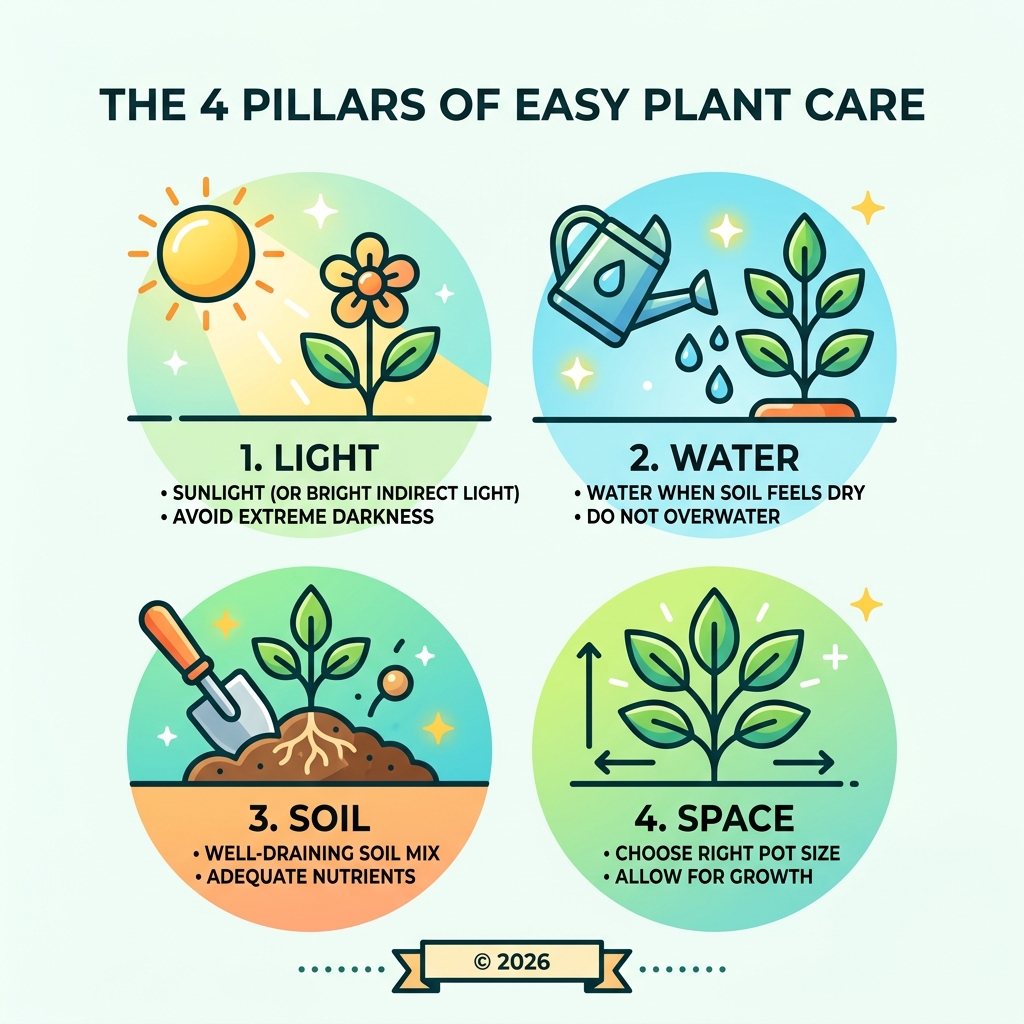
Most of these plants ask for very little: some sun, occasional water, and decent soil. That’s it.
If you’ve ever felt like gardening is too complicated or time-consuming, you’re not alone. Many beginners give up after losing a few plants to overwatering or bad light — not because they lack talent, but because they chose the wrong plants to start with.
The good news? Pick the right plants and they practically take care of themselves.
Below, we cover the best options across every category — annuals, perennials, bulbs, and indoor varieties — plus simple care tips to keep them thriving all season long.
Top Annuals: Easy to Care For Flowering Plants for Instant Color
Annuals are the “sprint runners” of the plant world. They live their entire life cycle in one season, which means they put all their energy into producing massive amounts of flowers. If you want instant gratification, these are the easy to care for flowering plants for you.
Zinnias: The Beginner’s Best Friend

Zinnias are widely considered the easiest flower to grow from seed. They typically sprout within just 5 to 7 days and begin flowering profusely from late summer into early fall. They come in almost every color of the rainbow and are incredibly heat tolerant. As long as they have full sun and decent air circulation to prevent mildew, they will reward you with stems perfect for cutting and bringing indoors.
Marigolds: Tough and Functional
Marigolds are the workhorses of the garden. They bloom consistently from spring through the first frost of autumn. Beyond their cheerful orange and yellow hues, they are famous for their functional benefits—specifically, they help repel mosquitoes and other garden pests. They are remarkably drought-tolerant once established and can handle poor soil better than most other flowers.
Sunflowers: Giants of the Garden
Sunflowers are practically foolproof. Ranging in height from a modest 3 feet to a staggering 16 feet, most varieties are highly drought and heat tolerant. They are excellent for beginners because their large seeds are easy to handle, and they grow so rapidly that you can almost watch them get taller by the day.
Calibrachoa (Million Bells)
If you are looking for something that spills beautifully over the edges of a pot, Calibrachoa is your answer. Often called “Million Bells,” these plants produce abundant, small petunia-like blooms all season long. One of their best features is that they are “self-cleaning,” meaning they bury their dead blooms by growing over them, so you don’t have to spend hours deadheading (removing old flowers).
Supertunia Vista Petunias
While some petunias can be finicky, the Supertunia Vista series is a game-changer for busy gardeners. These vigorous plants can grow up to 2 feet tall and spread 3 feet wide. They bloom from spring through fall without needing any deadheading, making them one of the most reliable easy to care for flowering plants for large landscapes or massive containers.
Comparison Table for Popular Annuals
| Plant | Growth Height | Sun Requirement | Best Feature |
|---|---|---|---|
| Zinnia | 12–36 inches | Full Sun (6+ hours) | Fast germination |
| Marigold | 6–48 inches | Full Sun | Pest repellent |
| Sunflower | 3–16 feet | Full Sun | Heat/Drought tolerant |
| Calibrachoa | 6–12 inches | Full Sun (8+ hours) | Self-cleaning |
| Petunia | 6–24 inches | Full Sun | Heavy bloomer |
Reliable Perennials and Bulbs for Year-After-Year Success
Perennials are the “marathon runners.” They might take a little longer to establish, but they return every year, saving you money and time in the long run.
Coneflowers (Echinacea)
Coneflowers are the royalty of low-maintenance perennials. They can reach up to 6 feet in height and bloom for months. They are incredibly hardy, drought-resistant, and a magnet for butterflies and bees. Once the blooms fade, the seed heads provide food for birds in the winter.
Daylilies: The “Can’t-Kill” Plant
Daylilies are often called the perfect perennial. They are tolerant of heat, humidity, and even poor soil conditions like amended clay. While each individual flower only lasts a day, a single plant produces dozens of buds that bloom in succession for weeks.
Sunny Knock Out® Roses
Many people avoid roses because they think they are high-maintenance, but the Sunny Knock Out® Rose changes that narrative. These shrubs are exceptionally disease-resistant, fighting off black spot and mildew without chemical help. They produce cheerful yellow blooms that fade to cream, and they are self-cleaning, so you get all the beauty of a rose garden with none of the typical “rose drama.”
Lavender and Catmint
For those in dry climates, Lavender and Catmint are essential. Lavender provides a soothing scent and repels mosquitoes, while Catmint (Nepeta) is a tough-as-nails perennial that deer and rabbits usually avoid. Both thrive in full sun and well-drained soil.
Bulbs: Daffodils and Siberian Iris
Daffodils are the ultimate “plant and forget” flower. Plant the bulbs in the fall, and they will pop up every spring. Unlike tulips, squirrels and deer usually leave daffodil bulbs alone. Similarly, the Siberian Iris is a hardy choice that grows about 34 inches tall and requires very little attention once the roots are established.
Best Indoor Flowering Varieties for Beginners
Bringing the garden inside doesn’t have to be a struggle. We have curated a list of low-maintenance flowering indoor plants that thrive in home environments.
Peace Lily (Spathiphyllum)
The Peace Lily is perhaps the most famous indoor bloomer. It is incredibly communicative; if it’s thirsty, the leaves will droop to let you know, and they perk right back up after a drink. It’s also a powerful air purifier, helping to neutralize indoor toxins like benzene and formaldehyde.
Anthurium: The Longest Bloomer
Anthurium holds the title for the world’s longest-blooming plant. Its waxy, heart-shaped “flowers” (actually modified leaves called spathes) can last for a couple of months. They prefer bright, indirect light and only need watering when the top inch of soil feels dry.
Kalanchoe and Christmas Cactus
Kalanchoe is a succulent that produces clusters of tiny, vibrant flowers. It’s perfect for those who tend to forget to water, as its thick leaves store moisture. The Christmas Cactus is another resilient choice; it can live for decades and produces stunning exotic blooms even in lower light conditions.
Bromeliads and African Violets
Bromeliads bring a tropical flair with flowers that resemble pineapple crowns. They are unique because they often take in water through a central “cup” in their leaves. African Violets are classic indoor favorites that, when placed in a spot with bright indirect light, can bloom almost year-round.
Maintaining Your Indoor Oasis with Easy to Care For Flowering Plants
Maintaining an indoor garden is all about rhythm. At Futuro Ciencia, we recommend setting a consistent schedule, but always checking the plant first.
- Light: Most indoor flowering plants prefer “bright indirect light”—think of a spot near a window with a sheer curtain.
- Watering: Overwatering is the #1 killer. Always use a well-draining potting mix and pots with drainage holes to avoid root rot.
- Humidity: Plants like Peace Lilies and Anthuriums enjoy a bit of extra humidity, which you can provide by misting them or using a pebble tray.
Essential Care Guide for Low-Maintenance Blooms
Even easy to care for flowering plants need a solid foundation. If you get the planting right, the maintenance becomes a breeze.
Soil and Fertilizer
Most easy flowers prefer well-drained soil rich in organic matter. For containers, always use a high-quality potting mix rather than garden soil, which can be too heavy and compact. Using a slow-release fertilizer at the time of planting provides a steady stream of nutrients, so you don’t have to worry about liquid feeding every week.
Watering Wisdom
According to Calibrachoa research from UMN Extension, watering at the soil level is critical. Getting water on the leaves can encourage fungal diseases. For most outdoor plants, mulching is a secret weapon; a layer of wood chips or straw helps retain moisture and keeps the roots cool during heatwaves.
Planting Steps for Easy to Care For Flowering Plants
- Site Selection: Match the plant to the sun. Don’t put a sun-loving Zinnia in the deep shade.
- Digging Depth: Dig a hole twice as wide as the pot but only as deep as the root ball.
- Root Loosening: Gently tease the roots if they are circling the pot (root-bound).
- Backfilling: Fill the hole with soil and press down gently to remove air pockets.
- Initial Watering: Water deeply immediately after planting to settle the soil.
- Spacing: Follow the tag! Overcrowding leads to poor air circulation and disease.
Common Mistakes to Avoid
- Overwatering: This is the most common beginner mistake. If the soil is damp, don’t water!
- Ignoring Drainage: Never plant in a pot without a hole at the bottom.
- Planting Too Early: Wait until the danger of frost has passed. Soil temperatures should generally be above 55°F for most annuals.
- Wrong Zone: Always check your USDA Hardiness Zone before buying perennials to ensure they can survive your winter.
Frequently Asked Questions about Easy Flowers
Which flowering plants are best for hanging baskets?
For the best “spiller” effect, we recommend Calibrachoa, trailing Petunias, and Verbena. These plants naturally cascade over the sides. Fuchsias and Lobelia are also excellent, though they prefer slightly cooler spots with partial shade.
How do I get my plants to bloom all summer long?
Consistency is key. While many of the plants we’ve listed are “self-cleaning,” a light trim in mid-summer can re-energize them. Ensure they get enough sun—most flowering plants need at least 6 hours to produce buds. Using a high-phosphorus fertilizer (the middle number on the bag) can also boost flower production.
Are there easy flowering plants that are drought-tolerant?
Yes! If you live in a dry area or tend to forget the hose, look for Sunflowers, Lantana, Portulaca (Moss Rose), Sedum, and Blanket Flower. These plants have evolved to thrive with minimal water once their root systems are established.
Conclusion
Transforming your space into a tranquil oasis doesn’t require a degree in botany. By choosing easy to care for flowering plants, you can enjoy the mental health benefits of gardening—like stress reduction and increased creativity—without the frustration of high-maintenance species. Whether you are brightening your kitchen with a Peace Lily or filling your backyard with pollinators via Coneflowers, these plants are designed to succeed.
Ready to grow your collection? Explore more info about low maintenance plants and start your journey toward a greener, more vibrant home today!
