
The ZZ Plant: Your Secret Weapon for Effortless Indoor Greenery
zz plant low maintenance is not just a reputation — it’s practically a guarantee. If you’ve ever killed a succulent, forgotten to water a fern, or given up on houseplants entirely, the ZZ plant might be exactly what you need.
Here’s a quick answer to what makes it so easy to care for:
- Water: Every 2–3 weeks, only when the top few inches of soil are completely dry
- Light: Low to medium indirect light — even fluorescent office lighting works
- Soil: Any well-draining, peat- or bark-based potting mix
- Fertilizer: Just 1–2 times per year at half strength
- Repotting: Only every 2 years, or when roots visibly crowd the pot
- Temperature: Comfortable in standard household temps of 60–80°F
- Toxicity: Keep away from pets and children — all parts are toxic if ingested
Botanically known as Zamioculcas zamiifolia, the ZZ plant originates from the rocky, drought-prone regions of East Africa. It evolved to survive long dry spells by storing water in thick underground rhizomes — essentially potato-like reserves that keep the plant alive even when you forget it exists.
One plant owner put it well: after moving their ZZ between a windowless foyer and a north-facing apartment window — with waterings roughly every three weeks — the plant not only survived, it grew.
That’s the ZZ plant in a nutshell. It quietly thrives while you live your life.
Why the ZZ Plant is the Ultimate Low Maintenance Houseplant
When we talk about zz plant low maintenance at Futuro Ciencia, we often refer to it as “tough as nails.” But why is it so resilient? The answer lies in its natural history and biological makeup.
Native to the arid regions of Eastern Africa, including Kenya, Tanzania, and South Africa, the ZZ plant has spent centuries adapting to extreme conditions. In its home habitat, it faces long periods of drought followed by sudden, heavy rains. To survive, it developed thick, fleshy leaves and unique underground stems called rhizomes. These rhizomes look remarkably like small potatoes and act as a biological “battery pack,” storing water and nutrients for months at a time.
This makes the ZZ plant one of the best hardy indoor plants for busy people because it doesn’t rely on us for constant hydration. In fact, the ZZ plant is so self-sufficient that it can drop its leaflets during extreme drought to conserve moisture, only to bounce back once watered.
Furthermore, its slow growth rate is actually a benefit for the casual gardener. Unlike some tropical plants that quickly outgrow their pots and require constant pruning, a ZZ plant typically reaches a mature indoor height of 2 to 3 feet over several years. This means less work for us and more time to simply enjoy its glossy, architectural beauty. As noted in the ZZ Plant: A Narrative Guide – Brooklyn Botanic Garden, this plant is the ultimate confidence builder for beginners who fear they lack a “green thumb.”
Mastering Light and Water for Success
While the ZZ plant is nearly indestructible, understanding its basic needs for light and water will help it move from “surviving” to “thriving.” One of our favorite things about this plant is its flexibility; it can decorate a dim corner of a living room or sit under the bright fluorescent lights of a corporate office without skipping a beat.
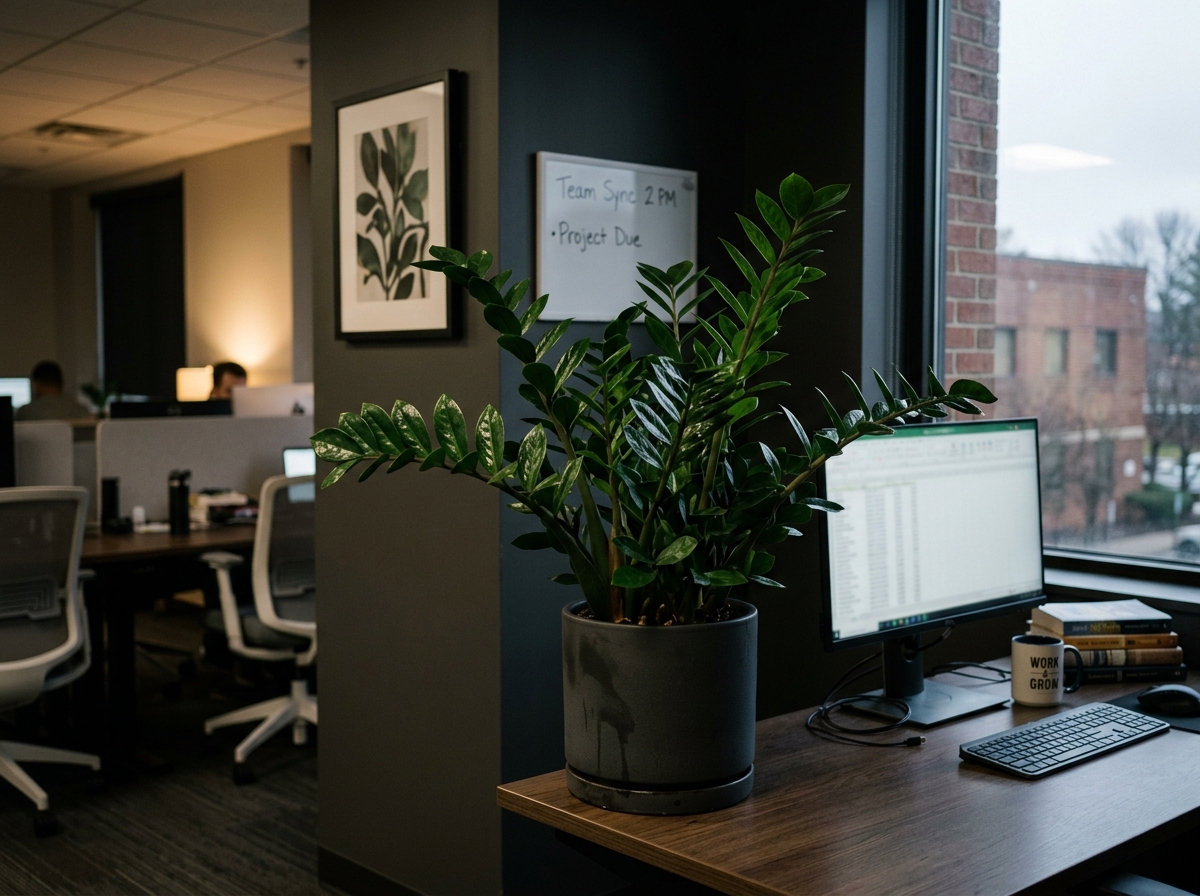
Ideal Light for ZZ Plant Low Maintenance Success
A common myth is that ZZ plants can live in a total vacuum of light, like a windowless closet. While they are incredibly indoor-plants-that-thrive-in-low-light, they still need some light to photosynthesize.
The “sweet spot” for a ZZ plant is bright, indirect light. This mimics the filtered shade it would receive under the canopy of trees in Africa. North-facing windows are ideal because they provide consistent, soft light without the harshness of the afternoon sun. If you have a south-facing window, just make sure to place the plant a few feet away or use a sheer curtain to avoid leaf scorch.
Interestingly, ZZ plants are among the few easy-to-grow-indoor-plants that adapt perfectly to fluorescent office lighting. If you spend your day in a cubicle, a ZZ plant is your perfect companion. It will grow more slowly in lower light, but its leaves will remain a deep, rich green.
Watering Schedules for ZZ Plant Low Maintenance
If you want to keep your ZZ plant happy, the most important rule is: when in doubt, don’t water. Because of those potato-like rhizomes we mentioned earlier, the ZZ plant is a champion of low-water-indoor-plants.
We recommend watering every 2 to 3 weeks. However, you should never water on a strict calendar. Instead, check the soil. Stick your finger about two inches into the potting mix; if it feels even slightly damp, wait another week. The soil must dry out completely between waterings.
Overwatering is the fastest way to kill a ZZ plant, as it leads to root rot. Signs of overwatering include bright yellow leaves and mushy stems. On the flip side, if the leaves start drooping or falling off, it might be time for a drink. For more detailed routines, you can check out our indoor-plant-care-tips-for-busy-people to help you stay on track without overdoing it.
Potting, Soil, and Propagation Secrets
The foundation of zz plant low maintenance success is the soil. Because this plant is so sensitive to moisture, it needs a mix that allows water to flow through quickly. A well-drained, peat- or bark-based potting soil is perfect. We often suggest adding a bit of perlite or sand to standard potting mixes to increase aeration.
According to the Florida Foliage House Plant Care: ZZ Plant guide, ZZ plants are stemless; what we see as “stems” are actually large petioles (leaf stalks) growing directly from the rhizomes. This unique structure influences how we pot and propagate them.
When to Repot Your ZZ Plant
ZZ plants actually prefer to be somewhat pot-bound. This means you don’t need to rush to give them a bigger home every few months. In fact, they are among the best indoor-plants-that-need-little-care because they only need repotting every 2 years or so.
Signs that it’s time to repot include:
- Roots growing out of the drainage holes.
- The plastic grower pot beginning to bulge or warp from the pressure of the rhizomes.
- Water running straight through the pot without being absorbed.
When you do repot, choose a container only one size larger (about 2 inches wider) than the current one. Spring is the best time for this, as the plant is entering its active growing season.
Easy Propagation Methods
One of the most rewarding aspects of ZZ plant ownership is how easy they are to multiply. If you want to share the love with friends, you have a few options.
| Propagation Method | How It Works | Speed | Best For |
|---|---|---|---|
| Division | Separating the rhizomes during repotting. | Fast | Getting a full plant quickly. |
| Stem Cuttings | Cutting a whole stalk and placing it in water or soil. | Medium | Creating a new architectural piece. |
| Leaf Cuttings | Placing a single leaflet into moist soil. | Slow | Patient growers (takes months). |
For those looking for easy-indoor-plants-for-beginners, division is the way to go. Simply pull the plant out of its pot, gently pull the rhizomes apart, and pot them separately. If you choose leaf cuttings, be prepared to wait—it can take several months for a new rhizome to form from a single leaf!
Troubleshooting and Safety: Pests, Toxicity, and Varieties
Even the “indestructible” ZZ plant has a few quirks we should be aware of. While it is rarely bothered by pests, keeping an eye on your plant’s appearance can prevent small issues from becoming big problems.
Popular ZZ Plant Varieties
While the classic green ZZ is a staple, several exciting cultivars have hit the market recently. These are all excellent low-maintenance-flowering-indoor-plants (though they rarely flower indoors):
- Raven ZZ: Known for its stunning dark purple, almost black foliage. New growth emerges bright green and darkens over time.
- Zenzi: A dwarf variety with a more compact growth habit and curled leaves, perfect for small desks.
- Chameleon: Features variegated leaves that emerge bright yellow and fade to green, creating a multi-toned look.
- Zamicro: An even smaller version of the standard ZZ, ideal for terrariums or tiny shelves.
Common Pests and Problems
The ZZ plant is naturally pest-resistant, but it isn’t completely immune. Occasionally, you might encounter aphids, spider mites, or fungus gnats if the soil is kept too wet. If you see tiny bugs, a simple wipe-down with a damp cloth and some neem oil usually does the trick.
The most common “problem” isn’t a pest at all—it’s yellowing leaves. As we’ve discussed, this is almost always a sign of overwatering. If you notice your plant is leaning or “leggy,” it is likely reaching for more light. Simply move it closer to a window or add a small grow light to maintain its upright shape. These qualities make it one of the top low-maintenance-plants-for-offices where lighting might be inconsistent.
Regarding safety, it is important to note that the ZZ plant contains calcium oxalate crystals. This makes it toxic to humans, cats, and dogs if ingested. It can cause mouth irritation, swelling, and stomach upset. We always recommend wearing gloves when repotting or pruning, as the sap can cause skin irritation for some people. It’s one of those indoor-plants-that-survive-neglect, but it does require a bit of respect for its chemical defenses!
Frequently Asked Questions about ZZ Plants
Is the ZZ plant toxic to cats and dogs?
Yes, the ZZ plant is toxic to pets. All parts of the plant contain calcium oxalate crystals, which can cause irritation to the mouth and digestive tract. If you have curious pets, it is best to keep the plant on a high shelf or in a room they cannot access.
How fast do ZZ plants grow indoors?
ZZ plants are considered slow growers. You might only see a few new stalks emerge each year. However, they grow in spurts. You might see no activity for months, followed by several new stems unfurling all at once. Providing bright indirect light and a very light dose of fertilizer in the spring can help speed things up slightly.
Can a ZZ plant survive in a room with no windows?
While they are famous for their low-light tolerance, no plant can survive in total darkness forever. If your room has no windows, you will need to keep the lights on for at least 8–10 hours a day (fluorescent or LED work fine) or rotate the plant into a sunnier room for a week every month to “recharge.”
Conclusion
The ZZ plant is truly a marvel of the indoor gardening world. By combining its ancient survival mechanisms with a modern aesthetic, it has earned its place as a favorite for homes and offices alike. Beyond its zz plant low maintenance nature, it also offers significant health benefits. NASA research has shown that ZZ plants are effective at purifying indoor air, removing common toxins like benzene, toluene, and xylene from our breathing space.
At Futuro Ciencia, we believe that everyone deserves to live in a tranquil oasis. The ZZ plant is the perfect starting point for creating that environment without the stress of a demanding care routine. Whether you are a frequent traveler, a busy professional, or someone who just wants a bit of greenery that won’t give up on you, the ZZ plant is your best bet.
Ready to take the next step in your plant journey? Check out our indoor-plant-care-schedule to see how easily a ZZ plant can fit into your life. Happy growing!
