
Why Your Peace Lily Is Turning Black (And How to Fix It Fast)
A black peace lily is one of the most alarming sights for any plant owner — and one of the most common distress calls we hear. The good news: it’s almost always fixable.
Quick answer: Why is your peace lily turning black?
| Cause | Key Sign |
|---|---|
| Overwatering | Mushy, black leaves starting at the base |
| Cold temperatures | Black edges after a cold snap or draft |
| Poor drainage | Soggy soil, standing water in saucer |
| Fluoride in tap water | Dry, crispy black leaf tips only |
| Natural aging | A single lower leaf slowly browning |
| Fungal infection | Dark spots with yellow halos spreading leaf to leaf |
Overwatering combined with cold temperatures causes roughly 80% of black leaf cases. Start there first.
Coming home to a plant that looked fine yesterday and looks like it’s dying today is stressful — especially when you’re already juggling a packed schedule. Peace lilies are famously low-maintenance tropical plants, celebrated for their glossy green leaves, white blooms, and air-purifying qualities. But they do have a few firm preferences, and when those aren’t met, they make it very obvious.
Black leaves are the plant’s way of telling you something has gone consistently wrong — usually with water, temperature, or drainage. The fix is rarely complicated, but you do need to identify the right cause before acting.
This guide walks you through exactly that.
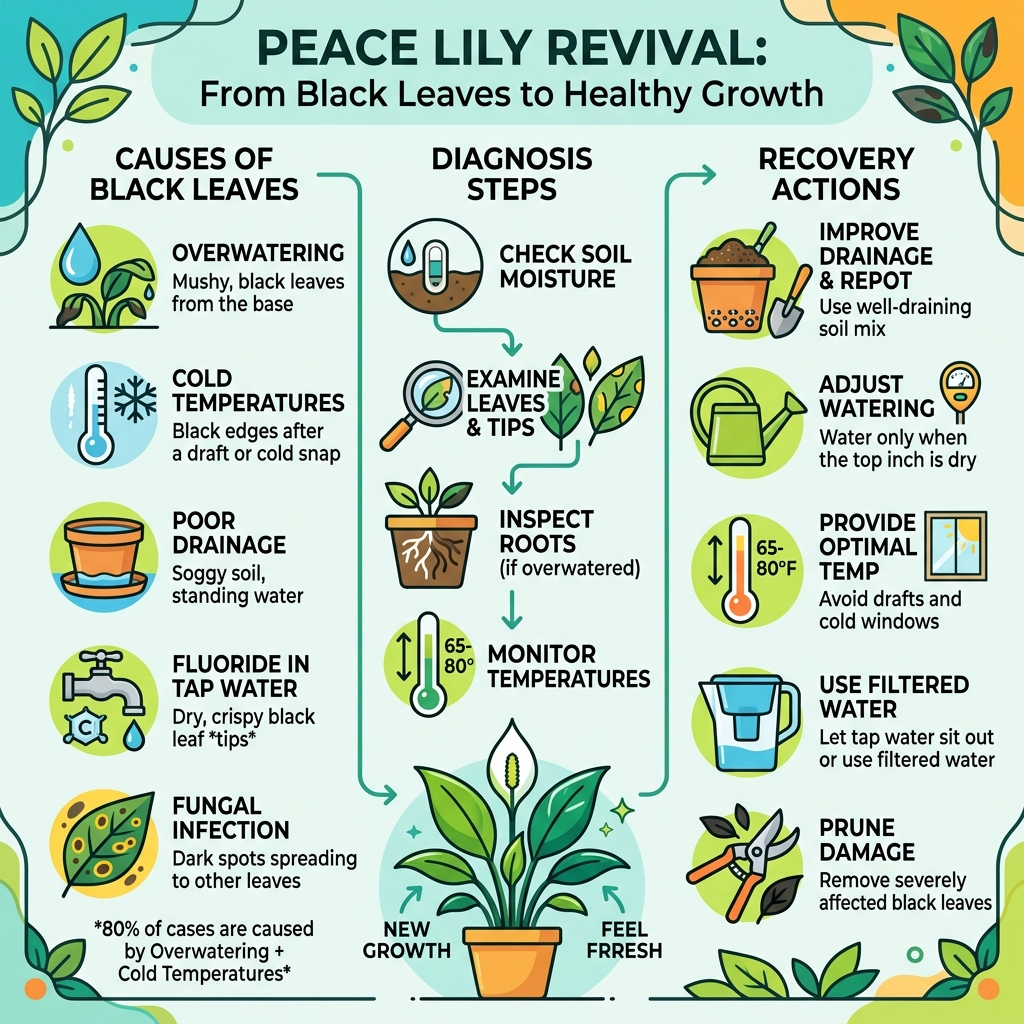
The Mystery of the Black Peace Lily: Common Causes
When we see a black peace lily, our first instinct is often to panic. However, at Futuro Ciencia, we’ve found that most cases boil down to a few environmental stressors. The most frequent culprit is overwatering. In fact, statistics show that black leaves on peace lilies account for approximately 80% of cases caused by overwatering combined with cold temperatures. When the soil stays soggy and the air turns chilly, the roots essentially suffocate and freeze, leading to that dreaded mushy black texture.
Another major factor is temperature. Peace lilies thrive in temperatures between 65°F and 80°F (18°C to 27°C). If the thermometer dips below 45-50°F, damage occurs rapidly. This often happens in the winter if a plant is left near a drafty window or a door that opens frequently to the cold outside air.
It is also important to distinguish between a sick plant and a specific variety. While most people are trying to “fix” a green plant that turned dark, there is actually a rare black peace lily variety known as the ‘Bongo Bongo.’ This cultivar naturally sports much darker, deep-green foliage that can appear almost black under certain lighting. If your plant has always been dark and looks healthy, you might just have a rare beauty on your hands!
For those with the standard green variety, blackening often starts at the leaf edges or the flowers. If you notice the white flower (the spathe) or the central spike (the spadix) turning black, it could be a sign of plant stress or simply the end of a bloom’s life cycle. To keep your indoor jungle thriving, check out our indoor-plant-care-tips-for-beginners/ for more foundational advice.

Identifying the Rare Black Peace Lily Variety
The ‘Bongo Bongo’ Peace Lily is a rare find in the plant world. Unlike a sick plant, this black peace lily variety is characterized by large, leathery, dark-green leaves that maintain their structure. It isn’t “dying” black; it’s “elegantly” dark. These cultivars are often sought after for their dramatic look and are generally considered indoor-plants-that-need-little-care/ because they are quite hardy once established. If you are shopping at a nursery and see a plant labeled as a “Black Peace Lily,” check the leaf texture. If it’s firm and glossy, it’s a cultivar; if it’s limp and mushy, it’s a standard lily in distress.
Diagnosing the Damage: Overwatering vs. Natural Aging
How do you know if you’re killing your plant with kindness or if it’s just getting old? Diagnosis is the first step in our rescue mission.
| Symptom | Likely Cause | Texture |
|---|---|---|
| Black, mushy leaves at the base | Overwatering/Root Rot | Soft and damp |
| Crispy black or brown tips | Fluoride/Low Humidity | Dry and brittle |
| Spots with yellow halos | Fungal/Bacterial Infection | Spreading spots |
| Single lower leaf turning dark | Natural Aging | Firm but fading |
Overwatering is the number one cause of black leaves. When the soil is saturated, the roots can’t access oxygen. This leads to root rot, where the roots literally begin to decompose. If you suspect this, smell the soil—root rot often has a sour, unpleasant odor. For a list of plants that might be more forgiving of a heavy hand, see our guide on low-water-indoor-plants/.
Chemical sensitivity is another hidden trigger. Peace lilies are notoriously sensitive to fluoride and chlorine found in tap water. This usually manifests as crispy black tips rather than full-leaf blackening. If you’re a busy professional, you might find our indoor-plant-care-tips-for-busy-people/ helpful for managing these small but vital details.
Lastly, watch out for “Anthracnose” or bacterial leaf spot. These fungal infections cause dark spots that seem to “eat” the leaf. This is often caused by poor air circulation or drainage hole blockages. Always ensure your pot can breathe!
Step-by-Step: How to Prune and Save Your Plant
If your black peace lily is looking a bit worse for wear, don’t give up! Most can be saved if the “crown” (the center where new leaves emerge) is still firm. Here is our Futuro Ciencia step-by-step recovery plan:
- Assess the Crown: Gently feel the base of the plant. If it’s firm, there’s hope. If it’s mushy and smells like compost, it may be too late.
- Prune the Dead Weight: Using sterilized pruning shears, cut the black leaves off at the very base of the stem. This stops the plant from wasting energy on dying tissue.
- Check the Roots: If the soil is soaking wet, slide the plant out of its pot. Trim away any slimy, black roots, leaving only the firm, white/tan ones.
- Repot with Fresh Soil: Use a well-draining, peat-free potting mix. We recommend repotting peace lilies every 1-2 years to prevent them from becoming root-bound, which can also lead to nutrient deficiencies and black leaves.
- Adjust Your Schedule: Move the plant to a warm, bright spot (no direct sun!) and hold off on watering until the top two inches of soil are dry.
Recovery isn’t overnight. You’ll usually see new growth in 2-3 weeks, but a full, lush restoration typically takes 2-3 months. For more tips on resilient species, check our hardy-indoor-plants-for-busy-people/ page.
Pruning Your Black Peace Lily for Recovery
Pruning is an art. Always use a 45-degree angle when cutting to prevent water from pooling on the wound. Beyond leaves, you should also remove spent blooms. When the white spathe turns green or black, follow the stem down to the base and snip it. This redirection of energy is vital for low-maintenance-flowering-indoor-plants/ to bounce back and produce new flowers later.
Creating the Ideal Environment to Prevent Black Leaves
To keep your black peace lily (or your green one!) from turning dark again, we must mimic its natural rainforest habitat. In the wild, these plants live on the forest floor under a canopy of trees. This means they love dappled, indirect light and high humidity.
- Temperature: Keep your home between 65°F and 80°F. Avoid placing the plant near AC vents or heaters.
- Light: Bright, indirect light is best. Direct sunlight will scorch the leaves, while too little light prevents blooming.
- Humidity: Since our homes are often dry, use a pebble tray or a humidifier. This prevents the leaf tips from turning black and crispy.
For more on managing light, see our indoor-plant-care-for-low-light/ guide. Peace lilies are also among our-favorite-air-filter-plants-indoor-collections-for-a-fresher-home/, making them worth the extra effort for the clean air they provide!
Optimal Conditions for a Black Peace Lily Variety
If you are lucky enough to own the ‘Bongo Bongo’ or a similar dark variety, darker leaves often contain more chlorophyll, allowing them to handle slightly lower light than variegated types. However, they still need moisture consistency. A “seasonal location strategy” is wise: move your lily away from windows in the winter to avoid the “cold trap” effect, and reduce watering to once every 10-14 days during the dormant months. Check out low-light-indoor-plants-for-apartments/ for more placement ideas.
Frequently Asked Questions about Peace Lily Care
Can a peace lily with black leaves be saved?
Yes! As long as the central crown is firm, the plant can regenerate. If the roots are mushy, you’ll need to perform “surgery” by trimming the rot and repotting in sterile soil. You should see new leaves unfurling in 4-6 weeks. Many indoor-plants-that-survive-neglect/ are surprisingly resilient, and the peace lily is no exception.
How often should I water to avoid black tips?
Forget a calendar; use the finger test. Stick your finger about two inches into the soil. If it feels dry, water it. If it’s moist, wait. In the winter, the cycle usually slows to every 10-14 days. We also recommend “bottom watering”—placing the pot in a tray of water for 20 minutes—to ensure the roots get hydrated without saturating the topsoil. This is a great tip for low-water-indoor-plants/.
Why are the flowers turning black?
If the plant is otherwise healthy, the flower is likely just old. This is a normal part of the spadix aging. However, if new flowers turn black immediately, it could be over-fertilization or an infestation of scale insects (small black bumps on the stems). Peace lilies are generally easy-to-grow-indoor-plants/, but they don’t like heavy feeding—once a month at half-strength is plenty.
Conclusion
At Futuro Ciencia, we believe everyone can transform their space into a tranquil oasis. While a black peace lily might look like a disaster, it’s usually just a cry for a little environmental adjustment. By monitoring your watering, keeping the air warm, and pruning away the old, you can enjoy the air-purifying benefits of this tropical beauty for years to come.
For more expert advice, visit our More info about indoor plant care section. Consistent maintenance and a little bit of observation are the keys to a happy, healthy home garden. Happy planting!
