
Why Repotting Plants Into Bigger Pots Keeps Your Houseplants Thriving
Repotting plants into bigger pots is one of the most important things you can do to keep your indoor plants healthy and growing.
Quick answer — the essentials you need:
- A new pot that is 1-2 inches larger in diameter than the current one (with drainage holes)
- Fresh potting mix — not garden soil
- Pruning shears or scissors for trimming roots
- A trowel for moving and filling soil
- Gloves and a mess mat to protect your hands and surfaces
Think of it like upgrading from a starter home. When you first moved in, it felt spacious. Over time, it got cramped. Your plants go through the same thing.
As a plant grows, its roots fill the pot. Eventually there’s no room left to expand. The old soil also loses its nutrients over time, making it harder for your plant to feed itself. Most houseplants need repotting every 12 to 18 months, though slower growers can go 2 to 3 years between moves.
The good news? You don’t need much to do it right. The right pot, the right soil, and a few basic tools are all it takes.
Essential Supplies for Repotting Plants Into Bigger Pots
When we prepare for a “horticultural relocation,” having the right gear makes the process smoother for both us and our leafy friends. At Futuro Ciencia, we believe that transforming your space into a tranquil oasis starts with using the right tools.
The most critical piece of gear is, of course, the container. Choosing between different materials can impact how often you need to water and how heavy the plant will be to move.
| Pot Material | Pros | Cons | Best For |
|---|---|---|---|
| Terracotta | Porous, allows roots to breathe, wicks away excess moisture. | Dries out quickly, heavy, can break easily. | Succulents, Cacti, Monstera |
| Plastic | Lightweight, retains moisture well, inexpensive. | Can tip over if the plant is top-heavy, less “breathable.” | Ferns, Peace Lilies, Pothos |
| Ceramic (Glazed) | Stylish, heavy (stable), holds moisture. | Often lacks drainage holes (requires a cachepot system). | Decorative floor plants |
Beyond the pot itself, you will need a few key items to ensure success:
- Drainage Holes: This is non-negotiable. Without a way for excess water to escape, your plant is at high risk for root rot. If you fall in love with a pot that doesn’t have holes, use it as a “cachepot”—keep the plant in a plastic nursery pot and nestle it inside the decorative one. For more details, check out our guide on selecting-indoor-plant-pots-and-planters and best-containers-for-indoor-plants.
- Trowels and Scoops: A small hand trowel helps you move soil without making a massive mess. For smaller tabletop plants, even a large kitchen spoon can work in a pinch!
- Pruning Shears: You’ll want clean, sharp shears to trim away dead roots or prune back the root ball if it has become a tangled mess.
- Gloves and Mess Mats: Repotting is messy business. A waterproof mess mat or even a few layers of old newspaper will save your floors. Gloves protect your hands from soil bacteria and prickly plants like cacti.
- Fresh Potting Mix: Never use garden soil for indoor plants; it’s too dense and may contain pests. You need a high-quality, airy mix. See our recommendations for the best-soil-for-indoor-plants.
Choosing the Right Pot Size for Your Plant
One of the most common mistakes we see is moving a plant into a pot that is way too big. It’s tempting to think, “I’ll give it tons of room so I don’t have to do this again for years,” but this is actually “killing with kindness.”
The golden rule for repotting plants into bigger pots is the 1-2 inch rule.
- Tabletop plants: Choose a new pot that is only 1 to 2 inches wider in diameter than the current one.
- Floor plants: For large specimens in big tubs, you can go up to 4 inches wider.
- Very small plants: An increase of just 1 inch is usually plenty.
According to the How to repot a plant: Expert Guide | RHS Advice, a new container should be no more than one-third larger than the current one. If the pot is too large, the excess soil stays waterlogged because there aren’t enough roots to drink up the water. This leads to a lack of oxygen and, eventually, root rot.
High-Quality Potting Mixes and Soil Amendments
Your plant’s soil is its pantry. Over time, the organic matter breaks down and the nutrients are washed away or absorbed. When repotting plants into bigger pots, you aren’t just giving them more space; you’re giving them a fresh meal.
Most standard houseplants thrive in a peat-free compost or a high-quality soilless potting mix. These mixes are designed for:
- Nutrient Density: Providing the minerals plants need for new leaves.
- Aeration: Ensuring there are air pockets so roots don’t suffocate.
- Moisture Retention: Holding onto water without becoming a swamp.
Specialty formulas are often necessary for certain groups. Cacti and succulents need a sandy, fast-draining mix, while orchids require bark-based media. If you’re unsure where to start, our article on how-to-repot-indoor-plants breaks down the best soil choices for common species.
When and Why Your Houseplants Need a Larger Home
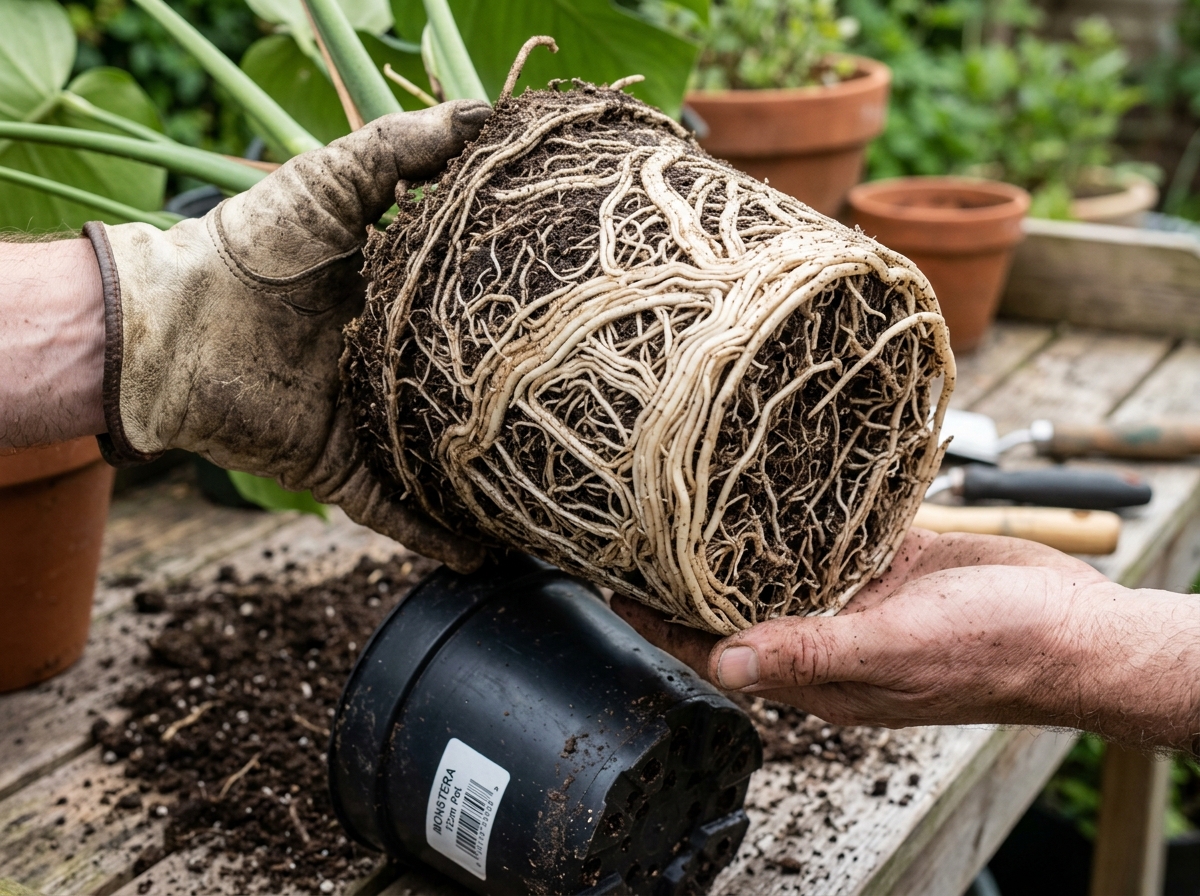
Why do we bother with this chore? Because roots are the engine of the plant. In a pot, space is a finite resource. When roots run out of room, they begin to circle the inside of the container, creating a tight “root ball” that can eventually prevent water and air from reaching the center.
The best time for repotting plants into bigger pots is during the spring or early summer. This is when plants enter their active growth phase. They have the energy to heal any minor root damage and will quickly send new roots into the fresh soil. Avoid repotting in winter when most plants are dormant and less able to recover from the stress of the move. For those dealing with overcrowded roots, check out our solutions-for-overcrowded-roots-in-indoor-plants.
Signs Your Plant is Ready for Repotting Into Bigger Pots
Your plant will usually tell you when it’s time for an upgrade. Keep an eye out for these “cries for help”:
- Visible Roots: If roots are poking out of the drainage holes or creeping over the top of the soil, the plant is definitely out of space.
- Stunted Growth: If it’s the growing season and your plant hasn’t put out a new leaf in months despite proper feeding, it might be “pot-bound.”
- Frequent Watering: If you find yourself watering every two days because the soil dries out almost instantly, there’s likely more root than soil in that pot!
- Top-Heavy Plants: If your plant keeps falling over because it has grown too large for its base, it needs a wider, heavier pot for stability.
- Salt Buildup: A white, crusty mineral film on the soil or pot rim indicates that the soil is old and saturated with minerals from tap water.
Identifying Root-Bound Conditions and Soil Depletion
If you suspect your plant is struggling, the best way to know for sure is to take a look under the hood. Gently slide the plant out of its pot. If the roots look like a bowl of spaghetti or are circling the bottom in a thick mat, it is root-bound.
Soil depletion is harder to see but just as dangerous. As organic matter breaks down, the soil “slumps” and becomes compacted. This kills the air pockets roots need to breathe. If you notice your soil has become a hard, hydrophobic brick that water just runs off of, it’s time for a refresh. For more on root health, see our guide on recognizing-and-remending-root-rot-in-indoor-plants.
Step-by-Step Guide to Successful Repotting
Ready to dive in? Preparation is key. We recommend watering your plant thoroughly the day before you plan to repot. This makes the root ball more flexible and ensures the plant is well-hydrated, which reduces “transplant shock.”
If the plant is stuck, don’t yank it by the stem! Instead, squeeze the sides of a plastic pot to loosen the soil. For ceramic pots, you can slide a dull butter knife around the inside edge to break the seal. If you encounter issues like mushy, dark roots during this process, refer to our indoor-plant-root-rot-solutions for help.
How to Handle and Loosen Roots During the Move
Once the plant is out, it’s time for a little “root massage.”
- Tease the Roots: Gently use your fingers or a small fork to loosen the roots at the bottom and sides. You want them to point outward so they can explore their new soil.
- Pruning: If the plant is severely root-bound, don’t be afraid to use your shears. Trimming away the outermost 15% of the root system—especially any that are dead or mushy—encourages fresh growth.
- Remove Old Soil: Shake away about one-third of the old, depleted soil. This makes room for the nutrient-rich new mix.
- Sanitize: Always make sure your tools are clean to prevent the spread of bacteria or fungi between plants.
The Process of Repotting Plants Into Bigger Pots Safely
Now, let’s get that plant into its new home:
- The Foundation: Add a layer of fresh potting mix to the bottom of the new pot.
- The Height Check: Place the plant in the center. The top of the root ball should sit about 1 inch below the rim of the pot. This “headroom” is essential so that when you water, the water doesn’t just spill over the sides.
- Backfilling: Fill the gaps around the sides with fresh soil.
- Firming: Use your fingers to gently press the soil down. You want to remove large air pockets, but don’t pack it so tightly that the roots can’t breathe.
- Finishing Touches: For more detailed visual steps, see how-to-repot-indoor-plants-2.
Post-Repotting Care and Common Mistakes to Avoid
The first few weeks after repotting plants into bigger pots are the most delicate. The plant is adjusting to its new environment and its roots are working hard to establish themselves.
It is normal for some plants to look a little “sad” or wilted for a day or two—this is called transplant shock. To minimize this, keep the plant in a spot with bright, indirect light and avoid extreme temperature changes. For troubleshooting during this phase, check indoor-plant-root-rot-solutions-2.
Aftercare: Watering and Light Requirements
Immediately after repotting, give your plant a thorough drink. Water it until you see it running out of the drainage holes. This helps settle the soil around the roots.
- Wait on the Fertilizer: Most high-quality potting mixes come with built-in slow-release fertilizer that lasts for 2 to 3 months. Adding more fertilizer immediately can burn the sensitive new roots.
- Monitor Moisture: Because the new pot is larger and contains more soil, it will hold more water than the old one did. You might find you need to water less frequently at first until the roots grow into the new space. Always check the soil depth with your finger before adding more water. More tips can be found at indoor-plant-root-rot-solutions-3.
Avoiding the “Killing with Kindness” Trap
The biggest danger in repotting plants into bigger pots is “over-potting.” As we mentioned, a pot that is too large holds too much moisture. This creates a soggy environment that attracts fungus gnats and causes root rot.
If you realize you’ve put a small plant in a massive pot, it’s okay to “pot down”—move it back into a smaller, more appropriate container. The goal is a balanced root-to-shoot ratio.
Frequently Asked Questions about Repotting
How often should I repot my houseplants into bigger pots?
Most active growers need a new pot every 12 to 18 months. However, this depends on the species. Fast-growing plants like Pothos or Monstera might need an annual move, while slow-growers like Snake Plants or Cacti might be happy in the same pot for 3 to 5 years. If you see roots through the drainage holes, it’s time, regardless of how long it’s been.
What if I don’t want my plant to grow any larger?
You don’t have to keep getting bigger pots! If your plant has reached the perfect size for your shelf, you can perform a “refresh.” Remove the plant, prune away about one-quarter of the outermost roots, and repot it into the same container with fresh soil. This gives the plant new nutrients without giving it the space to expand further. This is a common technique used in Bonsai.
Is it better to repot when the soil is wet or dry?
We recommend repotting when the soil is slightly moist. Dry soil can be messy and “dusty,” and it may fall away from the roots too quickly, causing stress. Watering the plant a day before makes the roots more pliable. However, avoid repotting when the soil is soaking wet and muddy, as this makes it difficult to handle and can lead to soil compaction.
Conclusion
At Futuro Ciencia, we know that your plants are more than just decor—they are living companions that brighten your space and purify your air. By mastering the art of repotting plants into bigger pots, you ensure that your indoor oasis continues to thrive for years to come.
Whether you are just starting your plant journey or are looking for professional assistance to maintain your greenery, we are here to help. More info about indoor plant care services is just a click away. Happy planting!
